

Introduced by Celonis
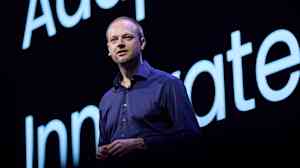
After a 12 months of boardroom declarations about “AI transformation,” this was the week the place enterprise leaders got here collectively to speak about what really works. Talking from the stage at Celosphere in Munich, Celonis co-founder and co-CEO Alexander Rinke set the tone early in his keynote:
“Solely 11 % of corporations are seeing measurable advantages from AI initiatives at this time,” he stated. “That’s not an adoption drawback. That’s a context drawback.”
It’s a sentiment acquainted to anybody who’s tried to deploy AI inside a big enterprise. You’ll be able to’t automate what you don’t perceive — and most organizations nonetheless lack a unified image of how work of their corporations actually will get completed.
Celonis’ reply, showcased throughout three days on the firm’s annual occasion, was much less about new tech acronyms and extra about connective tissue: easy methods to make AI match inside the messy, dwelling processes that drive enterprise. The corporate framed it as attaining an actual “Return on AI (ROAI)” — measurable affect that comes solely when intelligence is grounded in course of context.
A dwelling mannequin of how the enterprise works
On the coronary heart of the keynote was what Rinke referred to as a “dwelling digital twin of your operations.” Celonis has been constructing towards this second for years — however this was the primary time the corporate made clear how far that idea has developed.
“We begin by releasing the method,” stated Rinke. “Releasing it from the restrictions of your present legacy methods.” Data Core, Celonis’ information infrastructure, extracts uncooked information from supply methods. It’s able to querying billions of data in close to actual time with sub-minute refresh — extending visibility past conventional methods of document.
Constructed on this basis, the Process Intelligence Graph sits on the heart of the Celonis Platform. It’s a system-agnostic, graph-based mannequin that unifies information throughout methods, apps, and even gadgets, together with task-mining information that captures clicks, spreadsheets, and browser exercise. It combines this information with enterprise context—enterprise guidelines, KPIs, benchmarks, and exceptions. Each transaction, rule, and course of interplay turns into a part of a repeatedly up to date reproduction that displays how the group really operates.
On prime of the Graph, the corporate’s new Construct Expertise permits organizations to investigate, design, and function AI-driven, composable processes — integrating AI the place it delivers enterprise affect, not simply technical demos:
-
Analyze the place processes stall or repeat
-
Design the long run state, setting outcomes, guardrails, and AI touchpoints
-
Function with people, methods, and AI brokers working in sync — now orchestrated by a usually accessible Orchestration Engine that may set off and monitor each step in a single circulate
It’s a deliberate shift from discovery-driven AI pilots to outcome-driven AI operations — and a blueprint for orchestrating agentic AI, the place human groups, methods, and autonomous brokers work collectively by shared course of context fairly than in silos.
Actual-world proof: Mercedes-Benz, Vinmar, and Uniper
The Celosphere stage provided actual proof of theCelonisPlatform in motion, by reside tales from clients already constructing on it.
Mercedes-Benz shared how course of intelligence grew to become their “connective tissue” through the semiconductor disaster. “We had information in all places — vegetation, suppliers, logistics,” recalled Dr. Jörg Burzer, Member of the Board of Administration of Mercedes-Benz Group AG. “What we didn’t have was a technique to see it collectively. Celonis helped us join these dots quick sufficient to behave.”
The partnership has since expanded throughout eight of the corporate’s ten most crucial processes, from provide chain to high quality to after-sales. However what impressed the viewers wasn’t simply the dimensions — it was the cultural shift.
“In the event you present information in context, and let groups visualize processes, you additionally change the tradition,” Burzer stated. “It’s not simply course of transformation — it’s folks transformation.”
At Vinmar, CEO Vishal Baid described Celonis as “the inspiration of our automation and AI technique.” His international plastics distribution enterprise has already automated its total order-to-cash course of for a $3 B unit, attaining a 40 % productiveness raise. However Baid wasn’t there to simply rejoice completed work — he was wanting forward.
“Now we’re tackling the non-algorithmic stuff,” he stated. “Matching buy and gross sales orders sounds easy till you’ve got hundreds of edge circumstances. We’re constructing an AI agent that may try this allocation intelligently. That’s the following frontier.”
And within the vitality sector, Uniper, with accomplice Microsoft, demonstrated how process-aware AI copilots are already reshaping operations. Utilizing Celonis and Microsoft’s AI stack, Uniper can predict when hydropower vegetation will want upkeep — and cluster these jobs to scale back downtime and emissions.
“Every technician, every half, every system performs a task in a dwelling course of,” stated Hans Berg, Uniper’s CIO. “The human can’t see all of it. However course of intelligence can — and it could nudge the system towards the perfect end result.”
Agnes Heftberger, CVP & CEO, Microsoft Germany & Austria, who joined Berg on stage, summed it up crisply:
“The laborious half isn’t constructing AI options — it’s scaling them responsibly,” she defined. “It’s essential marry intelligence with the beating coronary heart of the corporate: its processes.”
Throughout the worldwide group, Celonis reviews more than $8 billion in realized business valueand over 120 licensed worth champions — proof that course of intelligence is driving measurable affect far past pilots. Rinke referred to as it “the early proof factors of a real return on AI.”
From closed methods to composable intelligence
Celosphere 2025 marked a shift from structure to interoperability — from defining enterprise AI to creating it work throughout boundaries.
Rinke’s imaginative and prescient for the long run is unapologetically open: “Good issues develop from open ecosystems,” he stated. That philosophy is taking form by deeper platform integrations — together with Microsoft Fabric, Databricks, and Bloomfilter — with zero-copy, bidirectional lakehouse entry that lets clients question course of information in place with minimal latency. The corporate additionally introduced MCP Server assist for embedding the Course of Intelligence Graph instantly into agentic AI platforms like Amazon Bedrock and Microsoft Copilot Studio.
These updates make “composable enterprise AI” tangible — organizations can now assemble and govern AI options throughout ecosystems fairly than being locked into any single vendor.
Somewhat than competing on who has the “finest agent,” the message was that enterprise AI will thrive when brokers work collectively by shared context and fashions that mirror how companies really run.
“Each vendor is bringing out their very own agent,” Rinke stated. “However each is proscribed to that vendor’s world. If they will’t work collectively, they will’t be just right for you. That’s what course of intelligence fixes.”
The thought drew sustained applause. For corporations juggling a number of cloud platforms, ERPs, and information instruments, composability isn’t simply elegant; it’s survival.
Past operations: information, democracy, and path
The closing moments of the keynote took an surprising flip — from enterprise structure to human braveness. Venezuelan opposition chief and Nobel Peace Prize winner María Corina Machado joined reside through satellite tv for pc to share how her motion used information, encrypted apps, and civic coordination to show election fraud and mobilize tens of millions.
It was a strong distinction: the identical rules — transparency, accountability, context — at work in each enterprise and democracy.
“Expertise is usually a weapon or a liberator,” Machado stated. “It is dependent upon who holds the context.”
Her phrases landed with weight in a room full of individuals used to speaking about information, methods, and governance — a reminder that context isn’t simply technical, it’s human.
Why this 12 months mattered
Celosphere 2025 marked a shift in how enterprises method AI — from experimentation to outcomes grounded in course of intelligence. The shift was evident in each tone and expertise, with a extra highly effective Knowledge Core, enhanced Course of Intelligence Graph, and new Construct Expertise. However the deeper takeaway was philosophical: AI solely scales when it’s grounded in how folks and methods really work collectively.
Celonis president Carsten Thoma was candid in acknowledging that early process-mining initiatives usually “stormed in with discovery” earlier than understanding organizational worth — a lesson that now defines the corporate’s measured, pragmatic method to enterprise AI.
Rinke put it finest close to the top of his keynote:
“We’re not simply automating steps,” he stated. “We’re constructing enterprises that may adapt immediately, innovate freely, and enhance repeatedly.”
Missed it? Catch up with all the highlights from Celosphere 2025 here.
Sponsored articles are content material produced by an organization that’s both paying for the publish or has a enterprise relationship with VentureBeat, they usually’re at all times clearly marked. For extra info, contact sales@venturebeat.com.
