

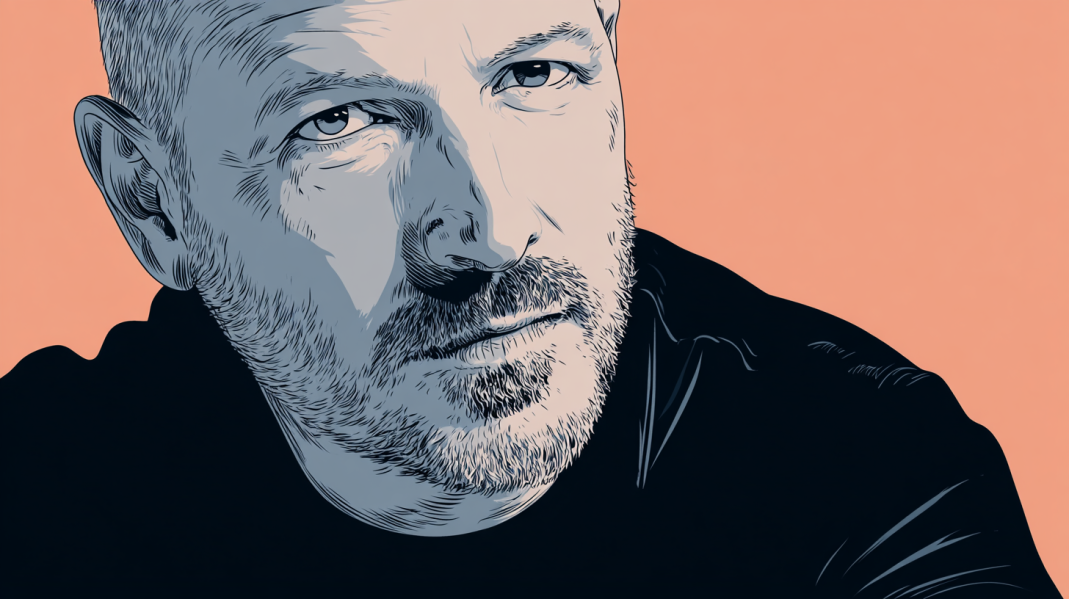
In a packed theater at Fort Mason, after a whirlwind keynote of product bulletins, OpenAI CEO Sam Altman sat down with Sir Jony Ive, the legendary designer behind Apple's most iconic merchandise. The dialog, held completely for the 1,500 builders in attendance and never a part of the general public livestream, supplied the clearest glimpse but into the philosophy and ambition behind their secretive collaboration to construct a brand new "household" of AI-powered units.
The partnership, solidified by OpenAI's staggering $6.5 billion acquisition of Ive's {hardware} startup Io in Might, has been the topic of intense hypothesis.Whereas concrete product particulars remained underneath wraps, the dialogue pivoted away from specs and towards a profound, virtually therapeutic mission: to repair our damaged relationship with expertise.
For practically 45 minutes, Ive, in his signature considerate cadence, articulated a imaginative and prescient that seems like each a continuation of and a repentance for his life's work. The person who designed the iPhone, a tool that arguably outlined the trendy period of private computing, is now on a quest to remedy the very anxieties it helped create.
Jony Ive's post-Apple mission, clarified by ChatGPT
The collaboration, Ive defined, was years within the making, but it surely was the launch of ChatGPT that offered a sudden, clarifying function for his post-Apple design collective, LoveFrom.
"With the launch of ChatGPT, it felt like our function for the final six years turned clear," Ive stated. "We have been beginning to develop some concepts for an interface based mostly on the potential of the expertise these guys have been growing… I've by no means in my profession come throughout something vaguely just like the affordance, like the potential that we're now beginning to sense."
This functionality, he argued, calls for a elementary rethinking of the units we use, which he described as "legacy merchandise" from a bygone period. The core motivation, he pressured, is just not about company agendas however a few sense of obligation to humanity.
"The rationale we're doing that is we love our species and we wish to be helpful," Ive stated. "We predict that humanity deserves a lot better than humanity typically is given."
An 'obscene understatement': Jony Ive's quest to remedy our tech nervousness
Probably the most hanging theme of the dialog was Ive's candid critique of the present state of expertise — the very ecosystem he was instrumental in constructing. He described our present dynamic with our units as deeply flawed, an issue he now sees AI as the answer to, not an extension of.
"I don't suppose we’ve got a simple relationship with our expertise in the meanwhile," Ive started, earlier than including, "After I stated we’ve got an uncomfortable relationship with our expertise, I imply, that's probably the most obscene understatement."
As a substitute of chasing productiveness, the first objective for this new household of units is emotional well-being. It's a radical departure from the efficiency-obsessed ethos that dominates Silicon Valley.
When requested about his ambitions for the brand new units, Ive prioritized emotional well-being over easy productiveness. "I do know I ought to care about productiveness, and I do," he stated, however his final objective is that the instruments "make us joyful and fulfilled, and extra peaceable and fewer anxious, and fewer disconnected."
He framed it as an opportunity to reject the present, fraught relationship folks have with their expertise. "We now have an opportunity to… completely change the scenario that we discover ourselves in," he said. "We don't settle for this needs to be the norm."
Buried in brilliance: why '15 to twenty compelling concepts' have develop into Ive's greatest problem
Whereas the imaginative and prescient is obvious, the trail is fraught with challenges. Reviews have surfaced about technical hurdles and philosophical debates delaying the mission. Ive himself gave voice to this wrestle, admitting the sheer tempo of AI's progress has been overwhelming. The speedy development has generated a torrent of prospects, making the essential act of focusing extremely tough.
"The momentum is so extraordinary… it has led us to generate 15 to twenty actually compelling product concepts. And the problem is attempting to focus," Ive confessed."I was good at that, and I've misplaced some confidence, as a result of the alternatives are, it'll be straightforward in case you actually knew there have been three good ones… it's simply not like that."
This admission gives context to reviews that the workforce is grappling with unresolved points across the gadget's "character" and computing infrastructure. The objective, in response to one supply, is to create an AI companion that’s "accessible however not intrusive," avoiding the pitfalls of a "weird AI girlfriend."
Past the display screen: Ive's design philosophy for an 'inevitable' AI gadget
Whereas no units have been proven, the dialog and prior reviews provide clues. The mission includes a "family of devices," not a single gadget.It’s going to seemingly be a departure from the screen-centric world we inhabit. Reviews counsel a "palm-sized device without a screen" that depends on cameras and microphones to understand its setting.
Ive argued that it might be "absurd" to imagine that as we speak's breathtaking AI expertise must be delivered by way of "merchandise which might be a long time previous." The objective is to create one thing that feels solely new, but utterly pure.
"It ought to appear inevitable. It ought to appear apparent, as if there wasn't presumably one other rational resolution to the issue," Ive stated, echoing a design philosophy usually attributed to his time with Steve Jobs.
He additionally spoke of bringing a way of pleasure and whimsy again to expertise, pushing again in opposition to a tradition he feels has develop into overly critical.
"By way of the interfaces we design, if we will't smile actually, if it's simply one other deeply critical form of unique factor, I feel that may do us all an enormous disservice," he remarked.
The chat concluded with no product reveal, leaving the viewers with a philosophical blueprint slightly than a technical one. The central narrative is obvious: Jony Ive, the designer who put a display screen in each pocket, is now betting on a screenless future, powered by OpenAI's formidable intelligence, to make us all rather less anxious and slightly extra human.
