

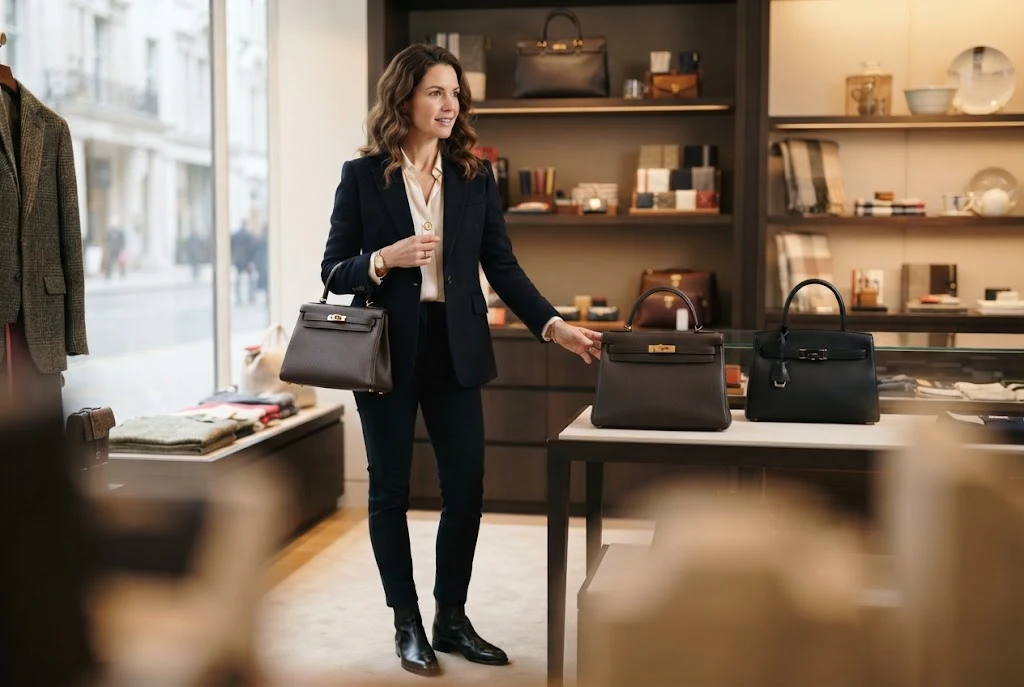
The difference between designer vs luxury fashion can be confusing because the two terms are often used interchangeably. A designer label can create premium clothing, handbags and accessories, while a luxury house can also be defined by heritage, craftsmanship, exclusivity and brand positioning. However, designer and luxury do not always mean exactly the same thing.
Understanding the distinction can make shopping decisions easier, particularly when comparing handbags, jewellery, clothing and accessories. It can also explain why some brands command premium prices and why certain pieces remain desirable long after a collection has disappeared from stores.
In this guide, we explore what designer fashion means, what makes a brand luxury, whether Gucci qualifies as a luxury brand, and how to think about luxury goods when choosing pieces for your wardrobe.
Designer vs Luxury: The Basic Difference
When comparing designer vs luxury, the simplest distinction is that “designer” generally describes fashion associated with a recognised designer or design-led fashion house, while “luxury” describes a broader market position built around qualities such as craftsmanship, exclusivity, heritage, desirability and premium customer experience.
These categories overlap significantly. Many of the world’s best-known luxury houses are also designer brands. However, not every designer label operates at the same level of the luxury market.
The British Fashion Council’s discussion of the UK designer fashion industry illustrates how broad the designer category can be, covering areas from ready-to-wear through contemporary fashion and higher-end collections.
That distinction matters because “designer” alone does not automatically tell you how a product is positioned, manufactured, priced or marketed.
What Is Designer Fashion?
What is designer fashion? In practical terms, it refers to fashion shaped by a recognised creative vision, designer or fashion house. The label may be known for a particular aesthetic, construction approach, silhouette or design language.
Designer fashion can include ready-to-wear clothing, handbags, footwear, accessories and more specialised collections. Some designer labels operate in accessible price segments, while others occupy the premium and luxury markets.
The designer element is therefore primarily connected with creativity and design identity. A recognisable name can influence how a garment or accessory is perceived, but the word “designer” by itself does not establish that an item belongs to the highest luxury category.
Design Is More Than a Logo
A designer piece can be valuable because of its shape, materials, construction, creative direction or cultural relevance rather than simply its branding.
This is important when evaluating fashion because a large logo does not necessarily make an item more desirable. In many cases, the most distinctive pieces rely on subtle details that become recognisable to people familiar with the brand.
What Makes a Brand Luxury?
Luxury fashion generally combines several elements rather than relying on one characteristic. These can include brand heritage, craftsmanship, carefully controlled distribution, premium materials, distinctive design, exclusivity and a strong customer experience.
Luxury positioning can also be reinforced through boutiques, personalised services, limited availability and long-established brand stories.
For example, Gucci describes itself as one of the world’s leading luxury brands and highlights creativity, Italian craftsmanship and innovation as central elements of its identity. The house was founded in Florence in 1921 and has developed from its original luggage roots into a global luxury fashion brand.
Luxury is therefore not simply a price category. A high price may be part of luxury positioning, but the wider brand experience and perceived value are equally important.
Is Gucci a Luxury Brand?
Is Gucci a luxury brand? Yes. Gucci officially describes itself as one of the world’s leading luxury brands and is part of Kering, a global luxury group with a portfolio of fashion, leather goods, jewellery and eyewear houses.
Gucci’s history also helps explain its position. Founded in Florence in 1921, the house originally developed around luggage and craftsmanship before expanding into a much broader fashion and accessories business. Its heritage, recognisable design language, Italian craftsmanship and global positioning have all contributed to its status as a major luxury house.
Today, Gucci’s offering includes handbags, ready-to-wear, footwear, jewellery, watches and accessories, alongside services such as personalisation, appointments and in-store collection.
That combination illustrates the difference between simply being a designer label and operating as a global luxury house.
Designer Fashion and Luxury Fashion Can Overlap
One reason the designer vs luxury debate continues is that many major fashion houses sit comfortably in both categories.
A luxury fashion house may employ celebrated designers and release seasonal collections. At the same time, it may build its business around leather goods, jewellery, watches, beauty products and other categories that extend beyond traditional designer clothing.
This creates an important distinction: designer describes an aspect of the creative identity, while luxury can describe the broader positioning of the brand and its products.
That is why a person can own a designer item without necessarily owning a product from a traditional luxury house.
Luxury Goods Examples
Luxury goods examples can be found across several fashion and lifestyle categories. Common examples include:
- Luxury handbags and leather goods
- High-end watches
- Fine jewellery
- Premium footwear
- Luxury ready-to-wear clothing
- Designer accessories
- High-end eyewear
- Premium fragrances and beauty products
However, the category is not defined purely by price. Two handbags can cost very different amounts while both being marketed as premium products. Factors such as brand heritage, materials, craftsmanship, distribution and demand can influence how a product is positioned.
Why Handbags Are Especially Important
Handbags are a particularly useful example because they sit at the intersection of fashion, design, craftsmanship and collectability.
A well-known handbag can become strongly associated with a fashion house and remain desirable across multiple seasons. Its appeal may come from its shape, history, materials, styling potential or cultural recognition.
This is one reason luxury accessories can also become important within the resale market. People may consider the condition, authenticity, rarity and demand for a particular item rather than simply looking at its original retail price.
Competitors of Gucci: How Luxury Houses Differ
When researching competitors of Gucci, it is useful to compare brands by their identity rather than treating every luxury house as identical.
Different fashion houses may emphasise different strengths. One may be particularly associated with leather craftsmanship, another with minimalist tailoring, another with heritage handbags, and another with avant-garde design.
These differences are important for shoppers because luxury is not a single aesthetic. Someone attracted to Gucci’s expressive approach may have completely different preferences from someone who prefers understated luxury.
Rather than asking which brand is universally better, it is more useful to ask which brand fits your personal style, wardrobe and intended use.
Does Luxury Always Mean Better?
A luxury label does not automatically mean that every product will be better for every shopper.
Personal preference matters. A beautifully made luxury handbag may not suit someone who prefers lightweight bags, while a highly recognisable designer piece may feel too bold for someone who prefers understated accessories.
Price should also be considered carefully. Paying more can provide access to particular materials, craftsmanship, design heritage or brand experience, but that does not mean the most expensive option is automatically the most suitable.
A thoughtful purchase starts with the product itself. Consider how often you will use it, whether it works with your existing wardrobe and whether you genuinely like its design.
Designer vs Luxury When Choosing Accessories
For accessories, the designer vs luxury distinction can be especially helpful.
If your priority is distinctive design, you may want to explore designer labels with strong creative identities. If heritage, craftsmanship and exclusivity are particularly important, you may prefer established luxury houses.
There is also a third consideration: longevity. A versatile accessory that works with many outfits can deliver more practical value than a highly fashionable item that quickly feels dated.
This connects closely with the growing interest in pre-owned and second-hand luxury. Instead of buying a new piece every time trends change, shoppers can consider carefully selected existing items and build a wardrobe around pieces they genuinely want to wear. Our guide to the luxury resale business explores this market in more detail.
How to Decide Between Designer and Luxury
When making a purchase, ask a few simple questions.
What Do You Actually Like?
Start with the design rather than the label. If you would not wear the item without the logo, it may not be the right purchase.
Will It Work With Your Wardrobe?
Think about how many outfits you can create with the item. A versatile handbag or accessory can become a reliable part of your wardrobe instead of an occasional statement piece.
Are You Buying for Use or Collecting?
The answer can change what matters most. Someone looking for an everyday accessory may prioritise durability and practicality, while a collector may care more about rarity, provenance, design history or specific editions.
Does the Price Make Sense for You?
Luxury fashion can represent a significant purchase. Consider the cost alongside how often you expect to use the item and whether it genuinely adds something to your personal style.
How Designer and Luxury Fashion Influence Personal Style
Understanding the distinction also helps explain why certain fashion pieces become style references. A luxury handbag can act as the focal point of an otherwise simple outfit, while a designer garment can introduce a distinctive silhouette or colour combination.
The most effective approach is often to combine investment pieces with everyday wardrobe staples. This creates balance and allows accessories to make a statement without making the entire outfit feel overly branded.
That idea connects naturally with our previous guide to fashion icons of today, where we explore how modern style leaders use proportions, accessories and distinctive details to create memorable outfits.
Final Thoughts on Designer vs Luxury
The designer vs luxury distinction becomes clearer when you look beyond price and logos. Designer fashion is closely connected with creative direction and recognised design identity, while luxury represents a broader combination of heritage, craftsmanship, exclusivity, desirability and premium positioning.
Many major fashion houses belong to both categories. Gucci is a clear example: its designer-led fashion identity exists within a wider luxury house built around heritage, craftsmanship, innovation and a broad accessories and fashion offering.
For shoppers, the most useful lesson is not to focus solely on labels. Look at the design, quality, versatility and personal appeal of each piece. Whether you choose a recognised designer item or a luxury accessory, the best purchase is one that fits your style and continues to feel relevant beyond a single trend.
