

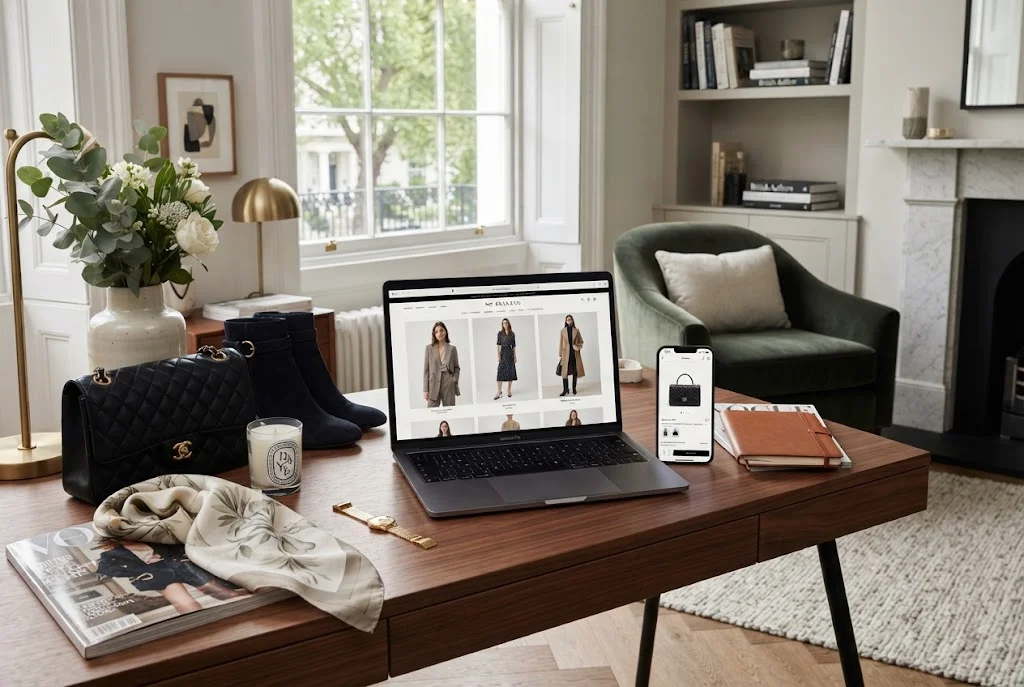
Luxury fashion ecommerce has transformed how UK shoppers discover, compare and purchase premium clothing, handbags, shoes and accessories. Luxury shopping is no longer limited to department stores, boutiques and appointments. Today, customers can explore collections online, compare products across marketplaces and access pre-owned pieces from specialist resale platforms.
This shift has also changed what shoppers expect from a luxury website. A premium online experience needs more than attractive product photography. Customers increasingly want detailed product information, trustworthy payment processes, reliable delivery, responsive customer service and confidence that what they are buying is authentic.
What Is Luxury Fashion Ecommerce?
Luxury fashion ecommerce refers to the online buying and selling of premium and luxury fashion products. This can include designer handbags, clothing, jewellery, footwear, watches and accessories sold through brand-owned websites, department stores, specialist retailers and online marketplaces.
The sector covers both new and pre-owned products. A shopper might purchase a newly released designer collection directly from a luxury brand, while another customer may search a resale platform for a discontinued handbag or vintage piece.
This broad ecosystem gives consumers more choice than traditional luxury retail alone. At the same time, it creates greater competition between brands and marketplaces for attention, trust and customer loyalty.
How Luxury Ecommerce Differs From Standard Fashion Ecommerce
Although the basic principles of online retail remain similar, luxury ecommerce has different customer expectations.
Luxury shoppers are often purchasing products where craftsmanship, heritage, exclusivity and brand identity are important parts of the value proposition. Consequently, the online experience needs to communicate these qualities clearly.
Presentation and Storytelling
Luxury brands often use detailed photography, editorial imagery and carefully structured product pages to communicate the character of a collection.
The product itself is only part of the experience. Materials, craftsmanship, design inspiration and brand heritage can all influence how customers perceive an item.
Trust and Transparency
Trust is particularly important when the product has a high price. Customers want confidence that the retailer is genuine, payment is secure and the item will match its description.
This becomes even more important within the resale market, where authentication can be a major part of the purchase decision.
Service
Luxury shopping has traditionally placed significant emphasis on customer service. Online retailers therefore need to provide accessible support, clear delivery information, straightforward returns and a polished digital experience.
The Growth of Luxury Fashion Online Marketplaces
The expansion of luxury fashion online marketplaces has made designer fashion more accessible to shoppers who may not live near major luxury shopping destinations.
Instead of visiting several boutiques, customers can compare products from different designers and sellers through a single digital platform. This can be particularly useful for consumers looking for specific handbags, discontinued designs or pre-owned pieces.
Online marketplaces also create opportunities for smaller luxury sellers to reach customers beyond their local area. However, marketplace operators need strong systems for product verification, seller management, payments and customer protection.
New Luxury Marketplace Models
Some marketplaces focus on new designer fashion, while others specialise in pre-owned products. There are also platforms that combine new and resale inventory.
These different models mean shoppers should understand exactly who is selling an item, whether authentication is available and what protection applies to the transaction.
What Makes Trusted Luxury Fashion Marketplaces?
When comparing trusted luxury fashion marketplaces, shoppers should look beyond the size of the product catalogue.
A reputable marketplace should make its buying process easy to understand. Customers should be able to find information about payments, shipping, returns, authentication and customer support without searching through unclear terms.
Authentication and Product Verification
Authentication is particularly relevant to pre-owned designer goods. A reliable marketplace should explain how eligible products are checked and what happens if an item does not meet its authenticity requirements.
This is one reason specialist resale platforms can appeal to shoppers who are uncomfortable purchasing expensive designer goods through informal channels.
Clear Condition Information
Used luxury products need accurate condition descriptions. Terms such as “excellent”, “very good” or “good” can be useful, but detailed explanations and photographs are even more valuable.
Buyers should be able to identify signs of wear before purchasing rather than discovering unexpected damage after delivery.
Secure Payments and Buyer Protection
A high-value purchase should be supported by secure payment methods and clearly explained buyer policies. Customers should know what happens if an order is damaged, delayed, incorrect or significantly different from its description.
Why Pre-Owned Luxury Is Important to Ecommerce
The pre-owned market has become an important part of the broader luxury ecommerce ecosystem. It gives consumers access to older collections while providing existing owners with a route to resell products they no longer use.
For example, someone who purchased a designer handbag several years ago can sell it through a specialist resale platform. Another shopper can then acquire that piece as a pre-owned item.
This creates a circular relationship between buying and selling. Our guide on where to sell designer handbags explores the seller side of this process, while where to buy used designer handbags focuses on the buyer’s perspective.
As a result, luxury ecommerce increasingly connects traditional retail with resale, vintage fashion and specialist marketplaces.
Luxury Ecommerce and the UK Shopper
UK consumers have access to a broad range of luxury fashion retailers and marketplaces. London remains an important centre for luxury fashion, but ecommerce means shoppers elsewhere in the country can access many of the same brands and products.
This has changed the relationship between location and luxury shopping. A customer in Manchester, Birmingham, Edinburgh or Bristol does not necessarily need to travel to a major fashion district to discover premium products.
Instead, online shopping can provide access to international brands, specialist retailers and resale platforms from almost anywhere in the UK.
Best Luxury Fashion Marketplaces in Europe
For UK shoppers who are willing to consider international platforms, the best luxury fashion marketplaces in Europe can offer additional inventory and access to designers or products that may be less readily available domestically.
However, international shopping requires additional checks. Customers should review delivery arrangements, applicable charges, returns, currency conversion and the location from which the item is shipped.
A lower listed price does not automatically represent better value if international delivery or other transaction costs significantly increase the final amount paid.
How Luxury Ecommerce Builds Customer Trust
Trust is one of the foundations of successful luxury ecommerce. A customer who is spending hundreds or thousands of pounds on an item needs confidence throughout the purchasing journey.
Professional Product Photography
High-quality imagery allows customers to inspect materials, construction, colour and details. For pre-owned products, photographs should also show visible imperfections.
Detailed Product Descriptions
Product pages should answer common questions before the customer needs to contact support. Dimensions, materials, colour, condition, included accessories and care information can all improve the shopping experience.
Transparent Policies
Clear shipping, returns and refund policies reduce uncertainty. Customers should not have to interpret complicated language to understand their rights and responsibilities.
Consistent Customer Service
Luxury positioning does not end when a customer clicks “buy”. Delivery updates, post-purchase support and efficient handling of problems can influence whether the customer returns in the future.
The Role of Digital Marketing in Luxury Ecommerce
Competition within luxury ecommerce means brands need effective ways to reach customers before they arrive on a product page.
Search engines, social media, editorial content, email marketing and digital advertising can all contribute to customer acquisition. However, luxury brands must maintain a consistent identity across these channels.
Search visibility can be especially valuable for customers researching products before purchase. Informational content can answer questions about materials, styling, authenticity, care and buying decisions, while commercial pages can guide shoppers towards products.
This balance allows an ecommerce brand to build visibility without turning every interaction into a sales message.
Personalisation in Luxury Ecommerce
Online luxury shopping can feel less personal than visiting a boutique, but digital technology provides opportunities to create more relevant experiences.
Product recommendations, recently viewed items, personalised email campaigns and curated collections can help customers discover products that match their interests.
However, personalisation should support the customer rather than become intrusive. A premium ecommerce experience should feel considered and useful rather than overly aggressive.
Mobile Shopping and Luxury Fashion
Luxury ecommerce websites also need to work effectively across smartphones, tablets and desktop computers.
Mobile shoppers should be able to navigate product categories, view high-resolution images, read descriptions, select options and complete checkout without unnecessary friction.
For luxury products, image quality remains particularly important. Customers need to inspect details while using a relatively small screen, so responsive image galleries and intuitive navigation can make a substantial difference.
What the Future of Luxury Ecommerce Could Look Like
The future of luxury ecommerce is likely to involve an increasingly connected relationship between brand websites, marketplaces, resale platforms and digital content.
Consumers are becoming accustomed to researching a product in one place, comparing prices in another and purchasing through a third-party platform. Luxury businesses therefore need to think beyond individual sales channels and consider the complete customer journey.
Resale is also likely to remain an important part of this ecosystem. The ability to buy, own, resell and replace luxury products creates a more connected lifecycle for fashion products.
For businesses operating in this space, the challenge is to combine digital convenience with the qualities that traditionally define luxury: trust, service, craftsmanship, exclusivity and strong brand identity.
Final Thoughts
Luxury fashion ecommerce has made premium fashion more accessible while changing how consumers discover, compare and purchase designer products.
The strongest online experiences combine attractive presentation with practical information, secure transactions, reliable fulfilment and genuine customer support. Meanwhile, marketplaces and resale platforms are expanding the range of products available to shoppers beyond current-season collections.
Whether you are buying a new designer piece or researching pre-owned luxury, the same principle applies: choose platforms that provide transparency, trustworthy service and enough information to make an informed decision.
As the digital luxury market continues to develop, understanding the difference between retailers, marketplaces and resale platforms will help UK shoppers navigate the growing online luxury fashion landscape with greater confidence.
