

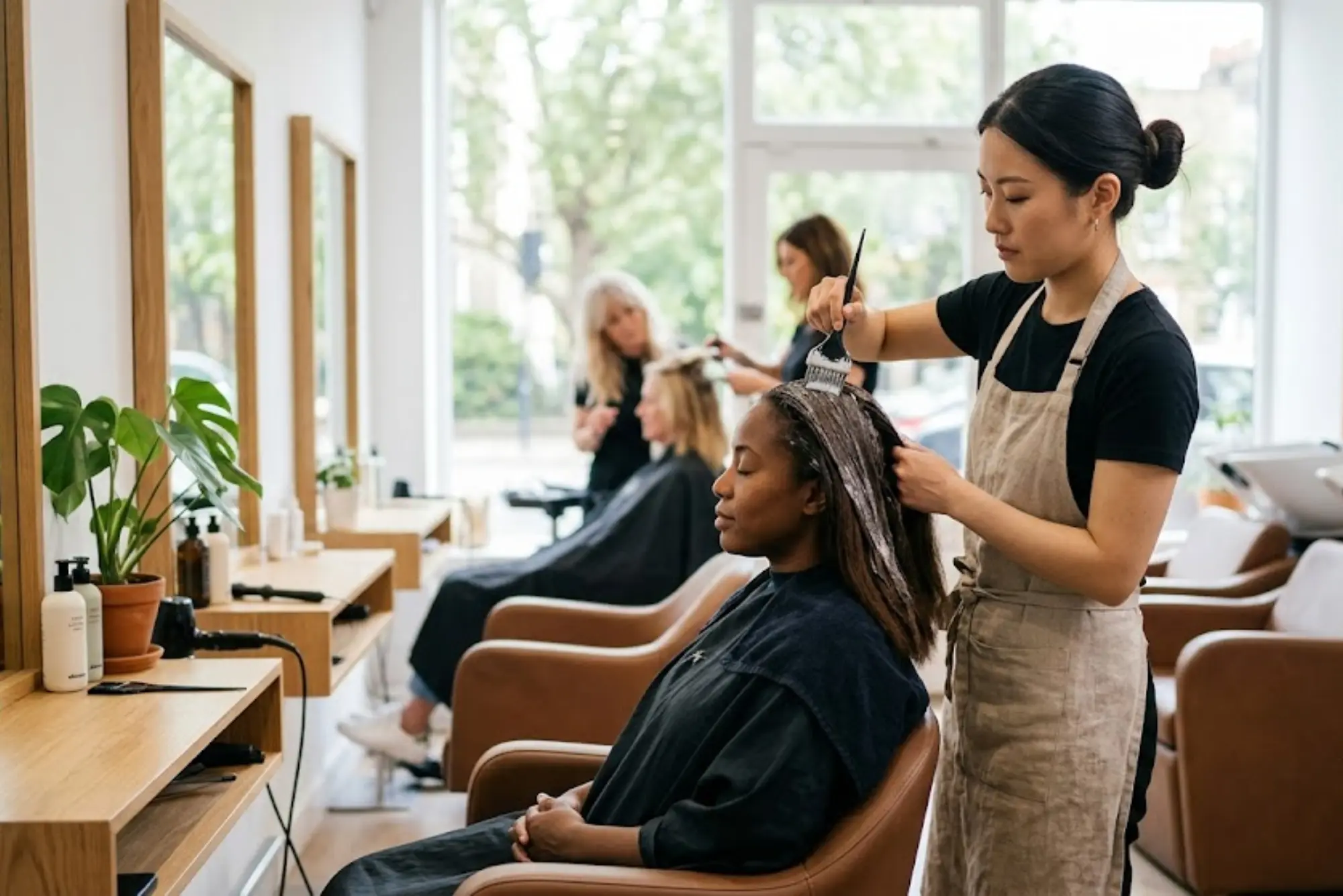
Hair goes through daily stress from heat styling, colouring, chemical treatments, UV exposure and environmental pollution. Over time, this can weaken the hair shaft, leading to breakage, split ends and a dull appearance. A protein treatment for hair can help reinforce damaged strands by temporarily filling weakened areas of the hair cuticle, leaving hair feeling stronger and looking healthier.
While protein treatments are widely available in salons and at home, they aren’t suitable for every hair type or every routine. Understanding when to use one—and when your hair needs moisture instead—can make a significant difference to your results.
If you’re dealing with frizz or damage from colouring, you’ll also find our upcoming guides on why is my hair frizzy and best hair dye shampoo useful for building a complete haircare routine.
What Is a Protein Treatment for Hair?
Hair is made primarily of keratin, a structural protein that gives each strand its strength and elasticity. Heat styling, bleaching, colouring and everyday wear can gradually weaken this structure.
A protein treatment coats the hair with proteins that temporarily reinforce damaged areas, helping improve:
- Hair strength
- Elasticity
- Smoothness
- Manageability
- Resistance to breakage
Although protein treatments cannot permanently repair damaged hair, they can noticeably improve its appearance and resilience when used correctly.
Signs Your Hair May Need a Protein Treatment
Your hair may benefit from additional protein if you notice:
- Frequent breakage
- Excessive shedding caused by weakened strands
- Hair that stretches excessively before snapping
- Loss of volume after chemical treatments
- Rough or porous texture
- Difficulty holding hairstyles
If your hair feels dry but remains strong and flexible, it may simply need more moisture rather than additional protein.
Benefits of Protein Treatments
Improves Hair Strength
Protein temporarily reinforces weakened sections of the hair shaft, helping reduce breakage during brushing and styling.
Supports Healthier-Looking Hair
Smoother hair reflects light more evenly, giving it a shinier appearance.
Enhances Manageability
Hair that has been strengthened often becomes easier to detangle and style.
Reduces Split Ends
Although split ends cannot be repaired permanently, protein treatments can temporarily improve their appearance until your next trim.
How Often Should You Use a Protein Treatment?
The ideal frequency depends on your hair’s condition.
- Healthy hair: every 6–8 weeks if needed.
- Colour-treated hair: every 4–6 weeks.
- Heavily damaged hair: follow the product instructions or seek advice from a professional stylist.
Using protein treatments too frequently may leave hair feeling stiff or brittle, so balance them with moisturising products.
What Oil Helps Hair Growth?
Many people searching for protein treatments also wonder what oil helps hair growth. While no oil can guarantee faster hair growth, some may help improve scalp condition and reduce breakage, supporting healthier-looking hair.
Commonly used hair oils include:
- Rosemary oil (when properly diluted)
- Argan oil
- Jojoba oil
- Coconut oil
- Castor oil
Healthy hair growth depends on many factors, including genetics, nutrition, scalp health and overall wellbeing.
Choosing the Best Product for Hair Regrowth
When looking for the best product for hair regrowth, it’s important to distinguish between cosmetic products that improve the appearance of hair and treatments that have clinical evidence behind them.
Products containing ingredients such as minoxidil are available for certain types of hair loss, but they may not be suitable for everyone. If you’re experiencing significant or sudden hair loss, consult a healthcare professional before starting treatment.
How to Make Your Hair Grow Faster Male
Many men ask how to make your hair grow faster male, but hair grows at its own natural rate for most people. The focus should instead be on maintaining healthy hair and reducing unnecessary damage.
- Eat a balanced diet rich in protein and iron.
- Avoid excessive heat styling.
- Keep the scalp clean.
- Reduce tight hairstyles that pull on the hair.
- Trim damaged ends regularly.
- Manage stress where possible.
Looking after the scalp and preventing breakage can help hair appear fuller and healthier over time.
The Best Hair Growth Serum: What to Look For
The best hair growth serum depends on your individual concerns. Some serums focus on improving scalp hydration, while others are designed to reduce breakage or support healthier-looking hair.
Look for products that:
- Match your hair type.
- Have clear usage instructions.
- Avoid unnecessarily harsh ingredients.
- Can be used consistently as part of your routine.
Building a Healthy Haircare Routine
A protein treatment works best as part of a balanced routine.
- Use a gentle shampoo suited to your scalp.
- Condition after every wash.
- Apply a protein treatment when needed.
- Follow with a moisturising mask if appropriate.
- Limit excessive heat styling.
- Protect hair from UV exposure and chlorine when possible.
If frizz is your main concern, our guide on why is my hair frizzy explains how moisture, humidity and hair damage affect different hair types.
Final Thoughts
A protein treatment for hair can be an excellent addition to your routine if your hair has become weak through colouring, heat styling or chemical processing. The key is balance—combining occasional protein treatments with regular moisturising care helps keep hair strong, flexible and manageable. Pair this with a healthy lifestyle, gentle styling habits and products suited to your hair type for the best long-term results.
For more information about hair health and common causes of hair loss, visit the NHS guide to hair loss.
