

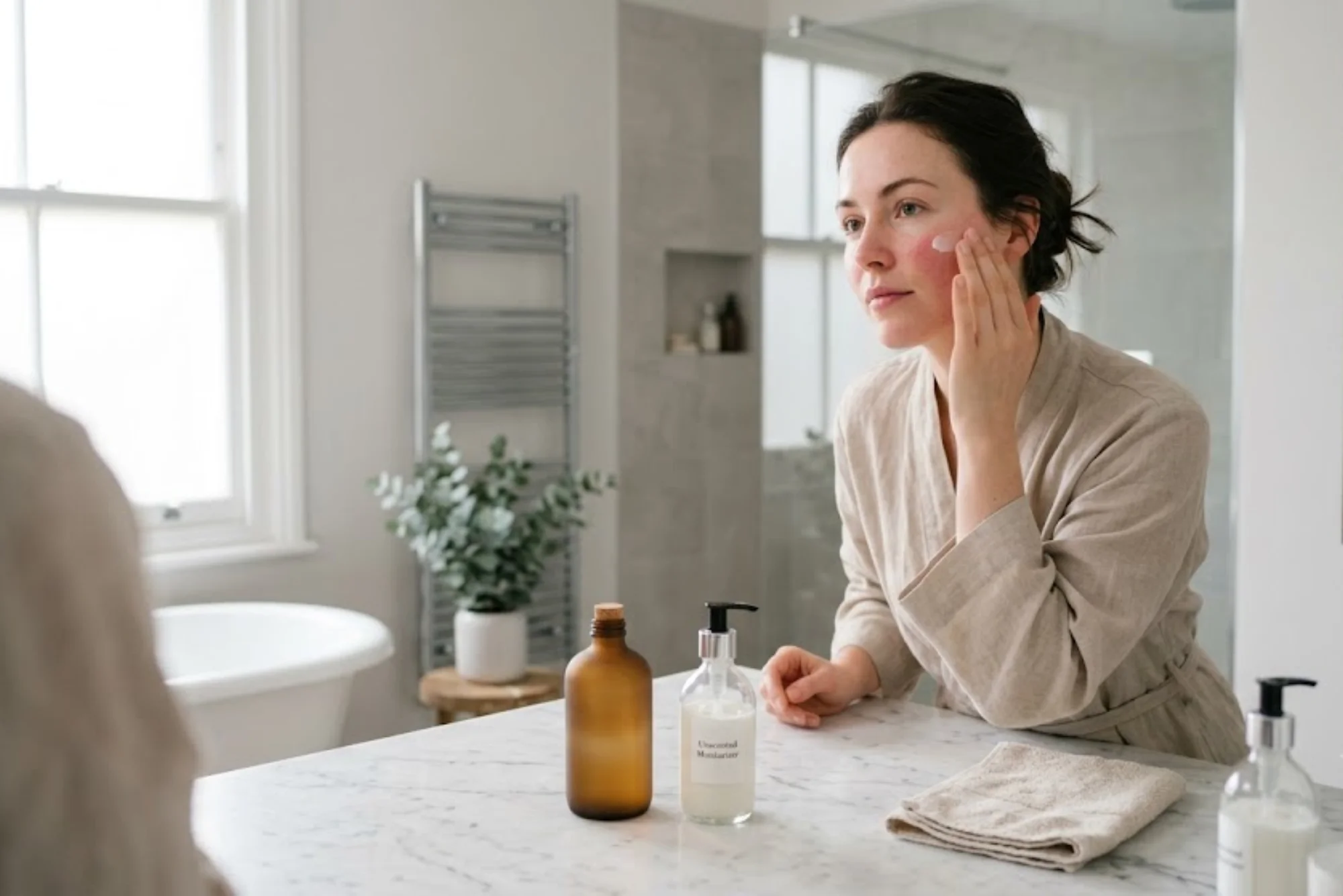
Finding good skin products for rosacea can feel overwhelming when every new product promises soothing results but often leaves skin feeling even more irritated. Rosacea is a long-term skin condition that commonly causes redness, flushing, visible blood vessels and sensitivity, making a gentle skincare routine far more important than simply following beauty trends.
Whether you’ve recently been diagnosed or you’ve been managing rosacea for years, choosing products that support your skin barrier can help minimise discomfort and reduce flare-ups. Instead of focusing on harsh active ingredients, prioritise hydration, fragrance-free formulas and consistent daily care.
If you’re also interested in improving skin as it matures, our guide to the best face serum for mature skin explains how to introduce targeted skincare without overwhelming sensitive complexions.
What Makes a Product Suitable for Rosacea?
Rosacea-prone skin has a weakened protective barrier, meaning it reacts more easily to environmental changes and irritating ingredients.
Good skin products for rosacea should generally include:
- Fragrance-free formulations
- Alcohol-free ingredients where possible
- Ceramides to strengthen the skin barrier
- Glycerin for lasting hydration
- Hyaluronic acid for moisture retention
- Niacinamide where tolerated
- Minimal ingredient lists
Avoid products containing high concentrations of exfoliating acids, strong scrubs or heavily fragranced essential oils unless recommended by a skincare professional.
Best Lotion for Rosacea
The best lotion for rosacea is one that provides lightweight hydration without clogging pores or triggering redness.
Look for lotions that:
- Absorb easily
- Contain barrier-supporting ingredients
- Remain fragrance free
- Have a creamy but non-greasy texture
- Are designed specifically for sensitive skin
Lotions work particularly well during warmer months when heavier creams may feel uncomfortable.
Choosing the Best Face Creams for Rosacea
Daily moisturising is one of the simplest ways to reduce irritation. The best face creams for rosacea help protect against water loss while supporting skin recovery.
A quality moisturiser should:
- Reduce tightness
- Provide lasting hydration
- Support the natural skin barrier
- Be suitable for daily morning and evening use
Consistency matters more than using multiple expensive products. A simple routine often performs better than an overly complicated one.
Night Moisturiser for Rosacea
Night-time is when skin naturally repairs itself, making a dedicated night moisturiser for rosacea an excellent addition to your routine.
Night creams can offer:
- Long-lasting hydration
- Barrier repair overnight
- Reduced morning tightness
- Improved skin comfort
Choose richer creams only if your skin tolerates them well, particularly during colder UK weather.
Build a Gentle Daily Routine
Morning
- Gentle cleanser
- Hydrating moisturiser
- Broad-spectrum SPF
Evening
- Gentle cleanse
- Barrier-repair moisturiser
- Night moisturiser if required
Keeping your routine simple helps minimise irritation while allowing products to perform consistently.
Ingredients Worth Looking For
Many dermatologists recommend focusing on barrier-supportive ingredients rather than aggressive treatments.
- Ceramides
- Panthenol
- Squalane
- Colloidal oatmeal
- Hyaluronic acid
- Glycerin
These ingredients help maintain moisture while supporting healthier-looking skin over time.
Ingredients That May Trigger Flare-Ups
Every person is different, but common triggers include:
- Strong fragrances
- High concentrations of alcohol
- Harsh exfoliating scrubs
- Menthol
- Witch hazel for some individuals
- Highly perfumed skincare
Always patch test new products before applying them across your entire face.
Don’t Forget Sun Protection
UV exposure is one of the most common rosacea triggers. Daily sunscreen is therefore an essential part of any skincare routine, even during cloudy UK weather.
If you’re unsure how to choose one, our upcoming guide on healthy skin tips for your face covers choosing sunscreen alongside other daily skincare essentials.
Lifestyle Habits That Can Support Rosacea
Skincare works best when paired with healthy habits.
- Use lukewarm rather than hot water.
- Avoid over-cleansing.
- Reduce excessive sun exposure.
- Manage stress where possible.
- Identify any personal food or environmental triggers.
- Stay well hydrated.
When Should You See a GP or Dermatologist?
If redness becomes persistent, painful or begins affecting your eyes, seek professional medical advice. Prescription treatments may be appropriate depending on the severity of your rosacea.
The NHS guide to rosacea offers reliable information about symptoms, treatment options and when to seek medical support.
Final Thoughts
Choosing good skin products for rosacea isn’t about buying the most expensive skincare. A gentle cleanser, barrier-supporting moisturiser, appropriate night cream and daily sunscreen often provide the strongest foundation for calmer skin. By introducing products slowly and focusing on skin health rather than quick fixes, many people find it easier to manage redness and sensitivity while maintaining a comfortable daily skincare routine.
