

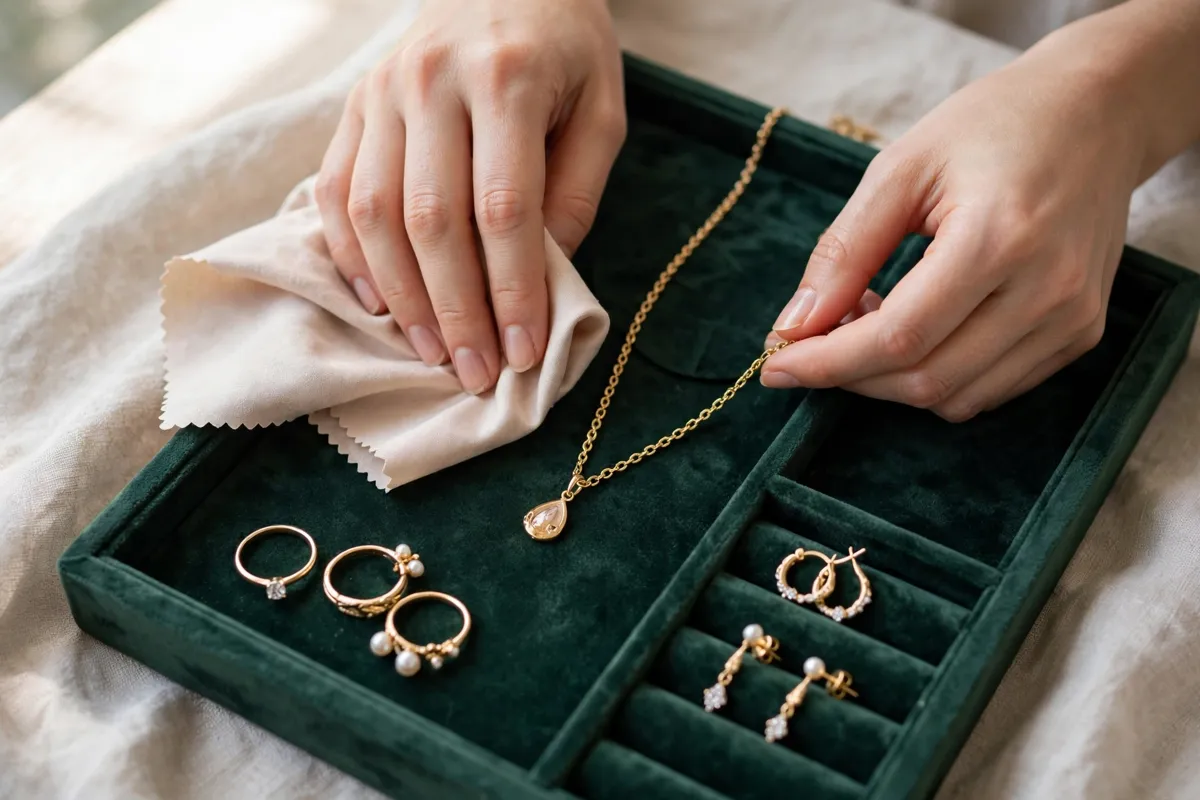
Good jewellery deserves good care. Whether your collection is fine gold, silver, costume pieces, or a mix of everything, the way you clean, wear, and store it decides how long it keeps its shine. Jewellery care is not complicated, but it does need consistency: the wrong cleaner or a little neglect can dull a finish, loosen a stone, or tarnish a favourite piece. This guide covers practical jewellery care for everyday wear, so your pieces stay beautiful for years.
Know What Your Pieces Are Made Of
Care starts with knowing your materials. Solid gold and platinum are hard-wearing but still scratch, while gold-plated and gold-filled pieces have a thin surface layer that wears away with rough handling. Sterling silver tarnishes naturally when exposed to air and moisture, and costume jewellery often uses coatings and glues that water and perfume can damage. Pearls and soft stones like opal and turquoise are the most delicate of all and need the gentlest touch. If you are unsure what a piece is made of, treat it as delicate until you know otherwise, and keep any certificates or receipts that describe the materials.
Everyday Habits That Protect Jewellery
Small daily habits make the biggest difference. Put jewellery on last, after perfume, hairspray, and moisturiser have dried, since chemicals in beauty products dull finishes and weaken glues. Take rings off before washing up, gardening, or exercising, and remove bracelets before heavy lifting. Avoid wearing fine jewellery in swimming pools or the sea, where chlorine and salt can damage metals and stones. At the end of the day, give pieces a quick wipe with a soft, dry cloth before putting them away. These habits take seconds and prevent most everyday wear. If you love layering pieces, our layering necklace guide shows how to style multiple chains without tangling or scratching them.
How to Clean Gold Jewellery Safely
Most gold jewellery can be cleaned at home with warm water and a drop of mild washing-up liquid. Soak the piece briefly, brush gently with a soft toothbrush around settings and links, rinse under clean water, and dry thoroughly with a soft cloth. Avoid abrasive cleaners, toothpaste, and ultrasonic cleaners for pieces with glued stones or delicate settings, since vibration and harsh pastes can loosen stones. For chains and pendants, cleaning little and often beats an aggressive annual scrub. Our gold necklaces UK guide covers styles and occasions, and the same gentle cleaning approach keeps every chain looking its best.
How to Clean Silver and Prevent Tarnish
Silver tarnishes because it reacts with sulphur in the air, and the process speeds up in humidity. Regular wear actually slows tarnish, since friction keeps the surface bright. To clean silver, wash it in warm soapy water, dry it completely, and polish gently with a silver cloth. For heavier tarnish, a silver dip or paste made for silver can help, but use it sparingly and rinse well, since repeated chemical cleaning wears the surface over time. Store silver in a dry place, ideally in a sealed pouch or a tarnish-resistant cloth, and keep it away from rubber bands and latex, which speed up tarnishing. If you wear silver bracelets daily, our bracelet styling guide includes pairing ideas that also work for mixed-metal stacks.
Caring for Gemstones and Pearls
Stones need individual attention. Diamonds are hard but can chip if knocked, and their settings collect dirt that dulls their sparkle, so a gentle soapy soak and soft brush keeps them bright. Softer stones like emeralds, opals, and pearls need more care: pearls should be wiped with a damp soft cloth after wearing and kept away from perfume and hairspray, while opals should never be soaked for long periods or exposed to sudden temperature changes. Always check the care advice for the specific stone before cleaning, and when in doubt, ask a jeweller. Our diamond jewellery guide explains what makes diamond pieces special and why their settings deserve regular checks.
When to Get Jewellery Professionally Checked
Home care has limits. Have rings with stones checked by a jeweller at least once a year, or sooner if a stone looks loose or a claw feels rough. Clasps, chains, and bracelet links wear with use, and a small repair now prevents losing a piece later. Professional cleaning is worth it for valuable or sentimental items, since a jeweller can clean settings safely and spot problems you might miss. Keep a note of where each valuable piece was bought and any valuations, so repairs and insurance are straightforward if something goes wrong.
Jewellery Care While Travelling
Travel is hard on jewellery, so pack it properly. Use a travel case with separate compartments, keep necklaces clasped and separated, and carry valuable pieces in hand luggage rather than checked bags. Remove jewellery before swimming on holiday, and rinse pieces with fresh water if they do come into contact with sea water or pool chemicals. At the end of a trip, clean and check everything before it goes back into your main collection, since sand, sunscreen, and salt water can leave residue that damages finishes over time. A little care on the road keeps holiday favourites looking as good as the day you bought them.
Building a Simple Jewellery Care Routine
A simple routine keeps everything in good shape: wipe pieces after wearing, clean them gently every few weeks, store them properly, and get stone-set items checked annually. Rotate your favourites so no single piece takes all the wear, and give delicate items their own space rather than tossing them into a shared box. With these habits, even everyday pieces keep their shine far longer. If you are building a collection, our gold hoop earrings guide and pendant necklaces guide offer styling ideas for pieces worth looking after properly.
