

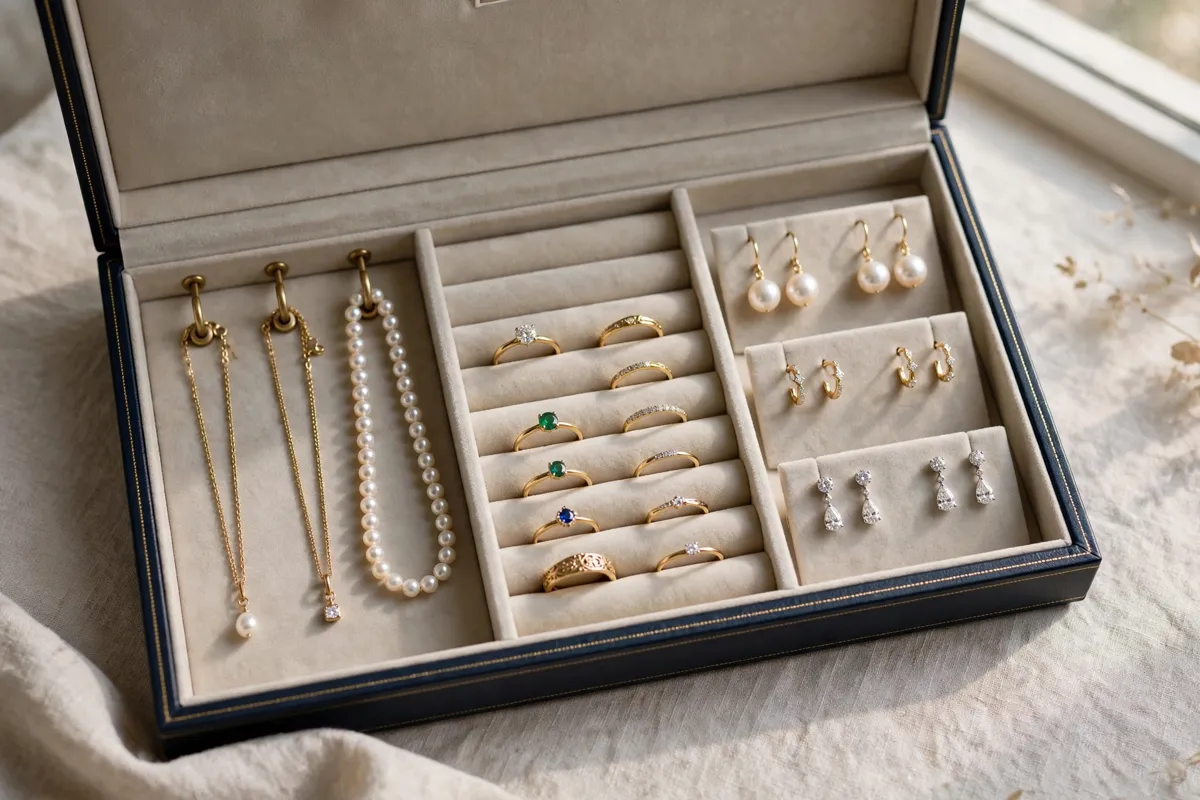
A tangled necklace, a scratched bracelet, and a missing earring are the usual signs of poor jewellery storage. Jewellery storage is about more than tidiness: the right storage prevents tarnish, scratches, and damage, and it makes getting dressed easier because you can actually see what you own. This guide covers smart jewellery storage ideas for every collection, from a few everyday pieces to a large and growing wardrobe of accessories.
Why Proper Jewellery Storage Matters
Jewellery damages itself when pieces rub together. Chains tangle, stones scratch softer metals, and earrings lose their partners in a shared drawer. Moisture and air cause silver to tarnish and can dull plated finishes, while sunlight fades some stones and dries out leather and silk cords. Good storage solves all of this at once by keeping pieces separated, dry, and out of direct light. It also protects your investment: a well-kept collection lasts longer, looks better, and is easier to value or insure. Spending a little time on storage now saves money on repairs and replacements later.
Separate Everything, Always
The single most important storage rule is separation. Every necklace should hang or lie on its own, every ring should have its own slot or pouch, and earrings should stay in pairs. Mixed piles are where damage happens. A jewellery box with compartments, a roll with individual pockets, or a tray with dividers all work well, as long as pieces do not touch each other. For necklaces, hanging hooks or a stand prevents the tangling that happens in drawers, and it also shows your collection at a glance. If you love layered looks, our layering necklace guide pairs well with hanging storage, since you can see each chain’s length before you choose.
Choosing the Right Jewellery Box or Organiser
The best organiser is the one that fits your collection and your space. A classic box with a ring roll, earring slots, and necklace hooks suits most people, while a wall-mounted cabinet works well for larger collections. Travel calls for a compact roll or case with secure pockets so nothing moves in transit. Look for soft linings, since rough materials scratch metals and stones, and check that clasps and lids close securely. Avoid overfilling: a box that forces pieces together defeats its own purpose. If your collection is growing, choose something with room to expand rather than buying the smallest option. For bracelet lovers, our bracelet styling guide shows how a varied bracelet collection can be stored and rotated.
Preventing Tarnish in Storage
Tarnish is storage’s quiet enemy, especially for silver. Store silver in sealed pouches or tarnish-resistant cloths, and add a small anti-tarnish strip to drawers or boxes where silver lives. Keep jewellery away from bathrooms and other humid rooms, since moisture speeds up tarnish and can damage glues and cords. Silica gel packets in a jewellery box help control damp, and a cool, dry bedroom drawer is usually a better home than a bathroom shelf. Check stored pieces every few months, since a piece tarnishing unnoticed in a drawer is easy to miss until it needs serious cleaning.
Storing Necklaces Without Tangles
Necklaces tangle because chains slide together in drawers. The simplest fix is to hang them: hooks, a stand, or a wall-mounted rail keeps each chain separate and visible. For travel, thread each chain through a drinking straw before clasping it, which stops it knotting in your bag. Delicate chains deserve their own pouch or hook, and heavier pendants should hang separately so their weight does not strain finer chains stored beside them. If you wear pendants often, our pendant necklaces guide covers styles that are worth giving their own dedicated hook.
Storing Rings, Earrings, and Bracelets
Rings store best in a roll or tray with individual slots, which stops stones scratching each other and keeps sets together. Earrings should always be stored as pairs, ideally in a case with separate holes or compartments so a single earring cannot wander off. Bracelets and bangles can stand upright on a bracelet holder or lie flat in separate compartments, but avoid stacking heavy bangles on top of delicate chains. For special-occasion pieces, keep the original box when you have it, since it was designed for that piece and makes the item easier to identify later. Our gold necklaces guide and wedding fascinators guide both touch on keeping occasion pieces ready to wear.
Travel Jewellery Storage
Travelling with jewellery needs a different approach from home storage. A compact travel case with individual pockets keeps pieces separated in a bag, and threading necklaces through straws stops them tangling in transit. Pack only what you will actually wear, and keep valuable pieces in your hand luggage where you can keep an eye on them. When you arrive, unpack jewellery promptly rather than leaving it loose in a suitcase, and use the hotel safe for anything you are not wearing. At the end of the trip, clean each piece before returning it to your main collection, since travel exposes jewellery to sunscreen, salt water, and humidity that home storage never does.
Seasonal Storage and Keeping Track
If you rotate jewellery by season or occasion, store out-of-season pieces properly rather than leaving them in a drawer. Clean each piece before storing it, place it in its own pouch or compartment, and label the box so you can find things later. A simple list or photo of your collection helps for insurance and makes it easy to spot if something is missing. For gift pieces you are saving for an occasion, our Christmas gift ideas for mum guide is a reminder that well-stored gifts stay presentable until the day they are given. Good jewellery storage is a small habit that protects your collection, saves you time every morning, and keeps every piece ready to enjoy.
