

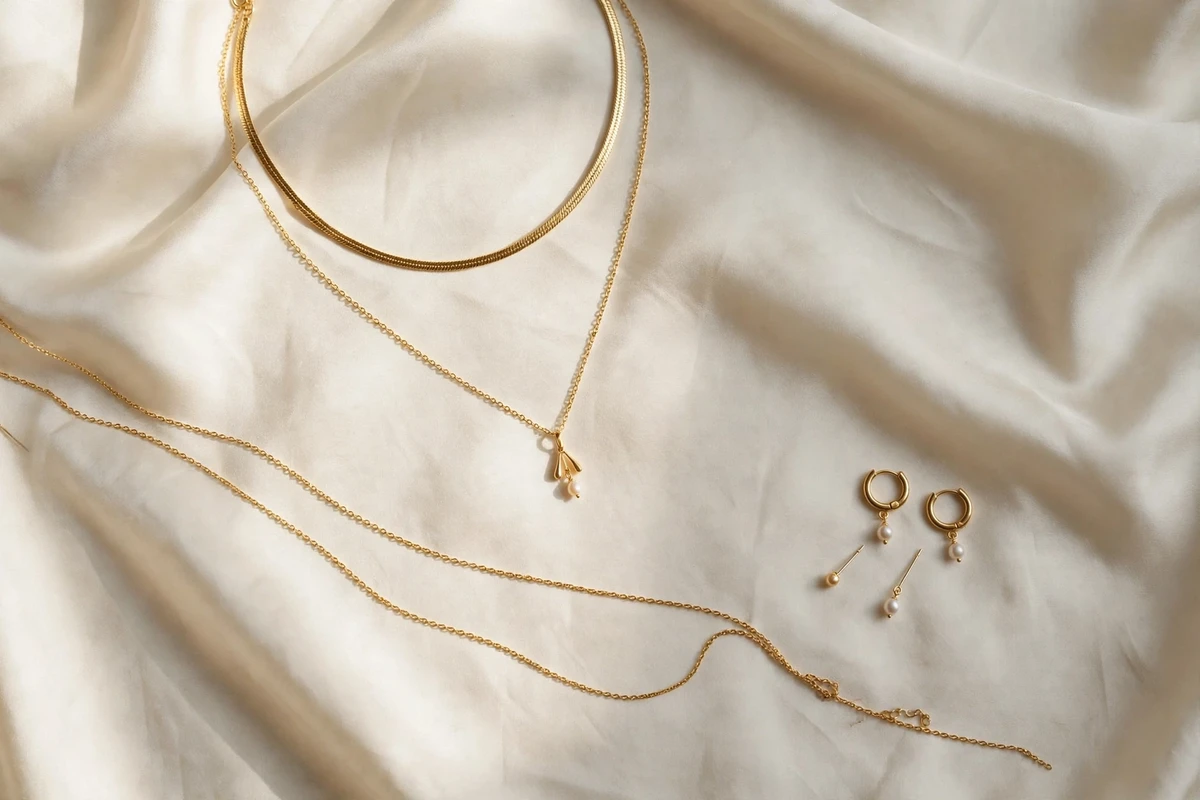
Layered necklaces can turn a plain outfit into something that looks thoughtfully put together, but getting the combination right is not always obvious. Chains tangle, pendants clash, and lengths that looked fine in the jewellery box can sit awkwardly once you put them on. The good news is that learning how to layer necklaces is mostly about a few simple rules: vary the lengths, balance the weights, and give each piece its own space. Once you understand those basics, you can build layered looks for work, weekends and evenings out with pieces you already own.
Start With Different Lengths
The single most important rule of necklace layering is spacing. When two chains are almost the same length, they compete for the same spot on your neckline, twist around each other and end up looking messy. Instead, choose pieces that sit at clearly different heights. A short choker or collar-length chain around the base of the neck, a mid-length chain that rests on the collarbone, and a longer pendant that falls to the chest give you a natural cascade where every piece stays visible.
If you are new to layering, start with just two necklaces rather than three or four. A delicate short chain paired with one longer pendant is the easiest combination to get right, and it works with almost any neckline. You can add a third layer once you are comfortable with how the first two sit together. Our guide to gold necklaces in the UK is a useful place to see the main chain styles side by side before you start experimenting.
How to Layer Necklaces Step by Step
Begin with the shortest piece and work downwards. Put on your choker or shortest chain first, then add the middle layer, and finish with the longest. Building in this order helps each necklace settle into its own space instead of sliding over the one below it. Stand in front of a mirror in natural light if you can, because artificial bathroom lighting can hide how metals really look against your skin.
Next, check the spacing with your outfit on, not just against bare skin. A layered set that looks perfect with a low neckline may disappear against a high crew neck or sit oddly on a collared shirt. V-necks and scoop necks are the easiest shapes for layering because they leave room for the cascade. If a chain keeps slipping under another, swap their order or change one length — small adjustments make a big difference.
Mixing Metals and Chain Styles
There is no rule that says all your layers must be the same metal. Mixing gold, silver and rose gold tones is a modern way to make a layered look feel personal, especially if you deliberately repeat each tone at least twice so the mix looks planned rather than accidental. If you prefer a classic look, staying within one metal family is simpler and always elegant.
Texture matters as much as colour. Combining a fine cable chain with a chunkier curb chain, a beaded strand or a paperclip-style link stops the layers from blending into one another. Try to vary the weight too: a very fine chain next to a heavy statement piece can look unbalanced, so aim for a gentle gradient from the most delicate piece at the top to the boldest at the bottom. As a finishing touch, you can anchor the whole look with the right earrings — our guides to gold hoop earrings and gold stud earrings for women explain which styles pair best with busy and simple necklines.
Adding a Pendant as the Focal Point
Most successful layered looks have one clear star, and it is usually the longest necklace. A pendant gives the eye somewhere to land and stops a stack of chains from looking like an undone tangle. Keep the shorter layers plain — simple chains, a small bar or a tiny charm — and let the pendant carry the detail. Our collection guide to pendant necklaces shows how much variety there is, from minimalist discs to stone-set designs.
If you want to wear two pendants, separate them clearly by length and scale: a small pendant higher up and a larger one below. Two similar-sized pendants at nearly the same height will knock against each other all day and fight for attention. A single meaningful pendant, worn well, almost always looks better than several competing ones.
How to Stop Layered Necklaces Tangling
Tangling is the most common complaint about layered necklaces, but a few habits keep it under control. First, put each necklace on separately and fasten it before adding the next, rather than putting them on as a tangled bundle from the drawer. Second, choose chains with different textures — smooth chains of the same style slide together and knot far more easily than mixed textures do. Third, check the clasps: a clasp that keeps rotating to the front is a sign the chain is too light for its length, and it will drag the other layers around with it.
Care between wears matters just as much. Hanging necklaces separately or laying them flat in individual compartments stops the drawer tangle that makes layering feel like hard work. Our guides to jewellery care and jewellery storage cover the simple routines that keep chains untangled, untarnished and ready to wear.
Quick Layering Formulas That Always Work
If you want a shortcut, keep three reliable formulas in mind. The everyday formula is a short fine chain plus a mid-length pendant — effortless with jumpers, blouses and dresses alike. The evening formula adds a third, longer delicate chain beneath the pendant to catch the light as you move. The statement formula pairs one bold chain at collarbone length with a long, simple pendant, and keeps every other piece of jewellery minimal.
Above all, treat these as starting points rather than rules set in stone. The best layered look is the one that suits your neckline, your outfit and your own taste. Try combinations in front of the mirror, take a quick photo of the ones that work, and you will soon build a small rotation of layered sets you can put on without thinking.

2 Comments
Pingback: Fashion Website Design: Best Practices for Modern Brands
Pingback: Good Shopping Apps for Clothes: Best Fashion Shopping Apps