

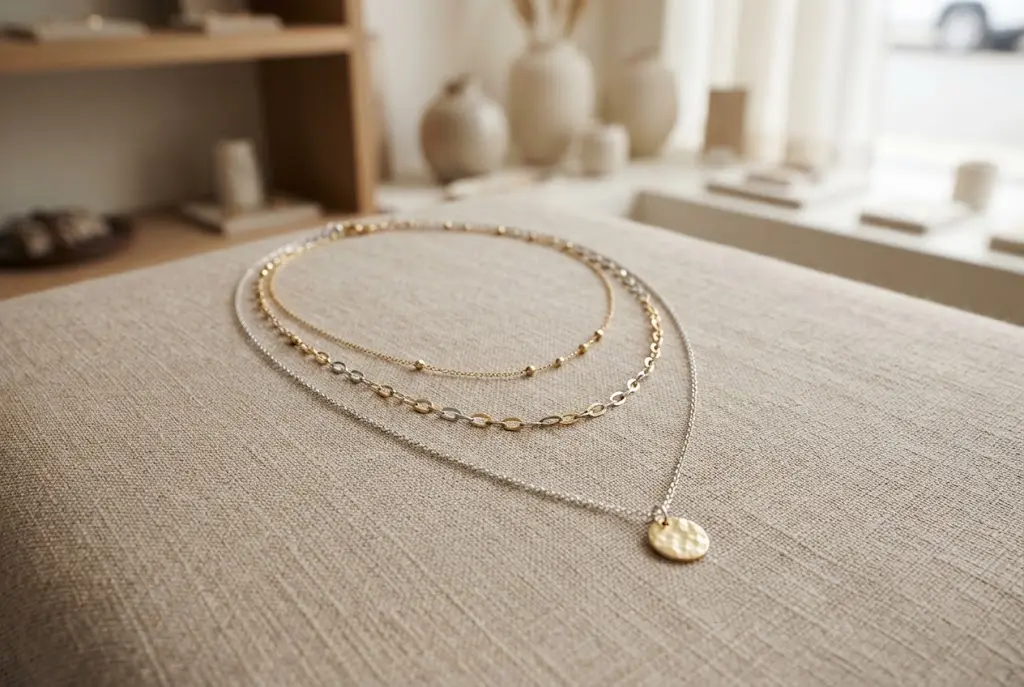
A layering necklace can transform a simple outfit by adding depth, texture, and personality around the neckline. Instead of relying on one necklace, layering allows different chains, lengths, pendants, and finishes to work together as part of one coordinated look. It can be subtle and refined or bold and fashion-forward, depending on the pieces you choose.
Necklace layering is also highly adaptable. A delicate chain can create an understated everyday look, while combining different textures and lengths can make a simple top or dress feel more styled. The key is to create enough contrast between the individual pieces while keeping the overall appearance balanced.
What Is a Layering Necklace?
A layering necklace is a styling approach that combines two or more necklaces around the same neckline. The pieces may differ in length, chain design, thickness, colour, or pendant style. Rather than wearing each necklace independently, the goal is to create a cohesive arrangement.
Layering works particularly well because each necklace can contribute something different. One chain might provide texture, another may introduce a pendant, while a longer piece can create visual length. Together, these elements create a more distinctive jewellery look.
For shoppers building a versatile jewellery collection, layering also means individual necklaces can be styled in multiple ways rather than being restricted to one particular outfit.
How to Build a Layering Necklace Look
The easiest way to begin is with two necklaces that have clearly different lengths. This creates separation and makes it easier to see each piece. Once you are comfortable with two layers, a third necklace can be introduced for additional texture or visual interest.
Start with the necklace you want to make the focal point. It could be a pendant, a distinctive chain, or a meaningful piece. Then add a shorter or longer chain that complements rather than competes with it.
For example, a delicate short chain can sit close to the collarbone while a longer pendant necklace creates a vertical line below it. This simple arrangement can work with casual clothing as well as smarter outfits.
Choosing the Right Link Necklace
A link necklace can add structure and texture to a layered arrangement. Link chains vary considerably in size, shape, and visual weight, so they can be used either as a subtle supporting layer or as the main statement piece.
If another necklace already contains a detailed pendant, a simpler link necklace may provide enough contrast without making the neckline look overcrowded. On the other hand, a bold link chain can become the central element when paired with thinner chains.
Think about proportions when selecting your links. A heavier chain generally works better with simpler supporting pieces, while a delicate link design can sit comfortably alongside other fine necklaces.
Understanding Chain Necklace Link Styles
The term chain necklace link covers a broad range of chain constructions. Different link shapes can create different visual effects, from sleek and polished to textured and substantial.
When layering, varying the chain structure can make the overall arrangement more interesting. For example, combining a fine chain with a more defined link pattern creates contrast without requiring multiple colours or elaborate pendants.
However, variety should still feel intentional. If every necklace has a completely different visual character, the combination can appear disconnected. Choosing one common element, such as a similar finish or complementary proportions, helps tie the pieces together.
Can You Wear a Gold and Silver Chain Necklace Together?
A gold and silver chain necklace combination can create a modern mixed-metal appearance. Although matching every jewellery piece to the same metal remains a classic approach, mixing gold and silver allows you to combine pieces from different parts of your collection.
The most effective mixed-metal combinations usually include some visual connection between the pieces. Similar chain thicknesses, complementary lengths, or a repeated design detail can make the combination look deliberate.
You do not need an equal amount of gold and silver either. One metal can act as the dominant tone while the second provides a contrasting accent. This often creates a more balanced result than using several equally prominent chains.
Why Necklace Length Matters
Length is one of the most important considerations when creating a layered necklace look. If several necklaces sit at almost exactly the same point, they can overlap and hide one another. Different lengths create visual separation.
A practical arrangement might include a short chain near the collarbone, a medium-length necklace carrying a small pendant, and a longer piece that sits lower on the chest. The exact lengths depend on your neckline and the proportions of the individual necklaces.
Layering also gives you the opportunity to work with different pendant sizes. A smaller pendant can occupy the upper layer while a larger pendant sits lower, creating a natural progression from top to bottom.
Layering Necklaces with Pendant Styles
Pendants can give a layered arrangement a clear focal point. If you already have a favourite pendant necklace, use it as the starting point and add simpler chains around it.
A delicate pendant can work particularly well with a fine link chain. Alternatively, a bold pendant may need only one additional necklace to prevent the overall appearance from becoming too busy.
When styling sentimental jewellery, consider giving the meaningful pendant enough space to remain visible. The purpose of layering is to enhance the necklace collection, not hide the piece you most want to showcase.
Layering Necklace Ideas for Everyday Outfits
For everyday wear, simplicity is often the easiest approach. Two lightweight necklaces can add detail to a plain T-shirt, knitwear, blouse, or casual dress without making the outfit feel overly formal.
Neutral clothing provides an especially useful backdrop because the necklaces become the main visual detail. A simple gold combination can add warmth, while silver chains can create a cooler and cleaner finish.
You can also adapt the number of layers to the occasion. Two necklaces may be enough for a daytime outfit, while a third layer can add more impact for an evening look.
Layering Necklaces for Different Necklines
The neckline of your clothing should influence how you arrange your necklaces. Open necklines provide more space for multiple layers, while high necklines may work better with longer chains that sit over the fabric.
V-neck clothing naturally creates a central line that can complement pendant necklaces. Crew-neck tops often work well with shorter layered chains, while open shirts can provide a broader area for combining different necklace lengths.
Before adding several necklaces, look at where the neckline sits and where each piece will naturally fall. This small step can make the final styling feel much more deliberate.
How to Keep Layered Necklaces from Looking Too Busy
More necklaces do not automatically create a better layered look. Balance is more important than quantity. If one piece is visually strong, let the other necklaces provide support rather than competing for attention.
Varying the lengths is one of the simplest ways to maintain clarity. You can also vary textures while keeping the metal colour consistent, or mix metals while keeping the chain styles relatively simple.
Another useful approach is to limit the number of statement elements. If you are wearing a substantial link necklace, for example, you may want the remaining layers to be delicate.
Gold and Silver Layering for a Modern Style
Mixed-metal jewellery has become a flexible styling option because it allows individual pieces to work together even when they were not originally purchased as a matching set.
A gold chain can provide warmth against a silver necklace, while a silver link can introduce contrast to a predominantly gold arrangement. If you prefer a coordinated look, choose necklaces that share similar levels of shine and visual weight.
You can also extend the mixed-metal idea to other accessories. A combination of gold and silver necklaces can be paired with carefully selected earrings rather than requiring every item to use exactly the same finish.
Layering Necklace Care and Storage
Several necklaces worn together can become tangled more easily than an individual chain. Proper storage therefore becomes particularly important if you regularly wear layered combinations.
Store chains separately whenever possible and fasten their clasps before putting them away. A jewellery organiser with individual sections can make it easier to keep delicate chains separated.
After wearing your necklaces, check them for tangling before storing them. This simple habit can prevent small knots from becoming more difficult to remove later.
Building a Versatile Necklace Collection
A strong necklace collection does not need dozens of pieces. A few carefully chosen styles can provide plenty of combinations. Consider having at least one delicate chain, one distinctive link design, one pendant necklace, and a longer piece for layering.
From there, you can experiment with different arrangements depending on your outfit. A necklace that looks understated on its own may become a useful supporting layer when paired with a pendant or link chain.
You can also expand your overall jewellery styling by coordinating necklaces with earrings. For example, a layered necklace arrangement can be paired with gold hoop earrings for a polished everyday look or with gold earrings for women studs when you want the necklace to remain the main focus.
Layering Necklace Styling Tips to Remember
The most important principle is balance. Choose different lengths so the necklaces remain visible, introduce texture thoughtfully, and avoid making every piece a statement. If you want to mix gold and silver, repeat at least one visual element so the combination feels intentional.
Most importantly, treat necklace layering as a flexible styling technique rather than a strict formula. Start with two pieces, experiment with their positions, and add another only if it improves the overall look.
A well-planned layering necklace arrangement can make everyday jewellery more versatile and expressive. Whether you prefer delicate chains, structured links, mixed metals, or pendant-focused combinations, thoughtful layering allows individual pieces to work together while giving your personal style more room to stand out.
As your collection develops, you can also explore complementary jewellery styles such as pendant necklaces and silver sterling hoop earrings to create complete looks across different occasions.
For jewellery care and consumer information in the UK, the UK Government’s hallmarking guidance provides useful information about precious-metal jewellery and hallmarking.

1 Comment
Pingback: Gold Hoop Earrings: Styles for Everyday Wear