

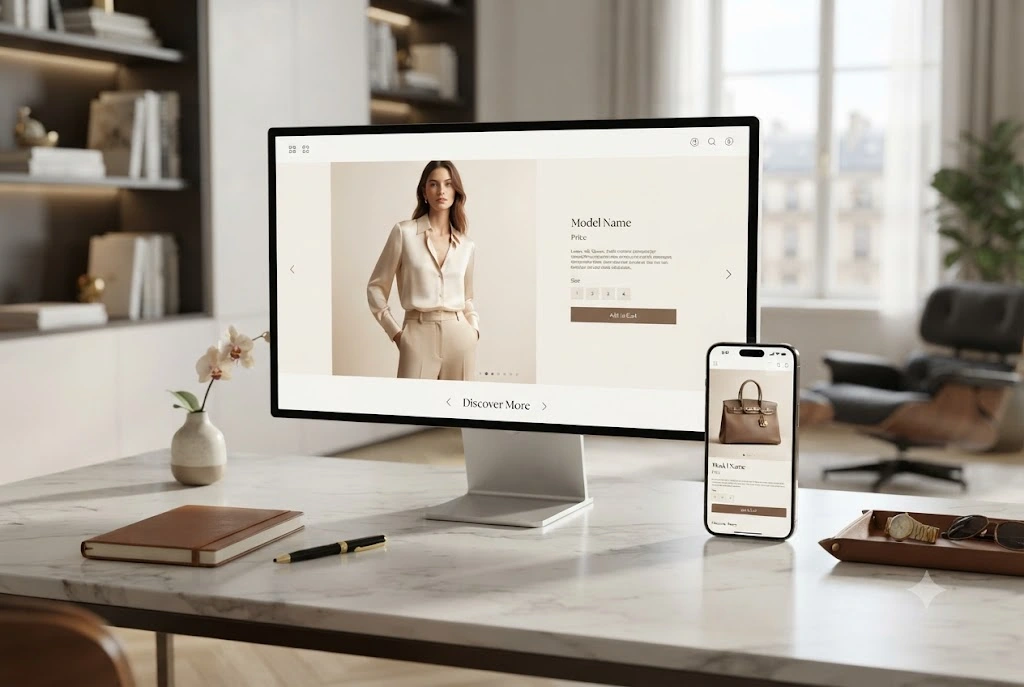
Luxury fashion brands are redefining online shopping, and luxury fashion e-commerce website design trends 2025 are setting a new benchmark for digital experiences. Today’s premium shoppers expect far more than beautiful product pages—they want immersive storytelling, seamless navigation, personalized recommendations, and exceptional service from the first click to checkout. As technology evolves, luxury websites are becoming sophisticated digital boutiques that reflect exclusivity while delivering outstanding usability.
In this guide, we’ll explore the most influential design trends shaping luxury fashion e-commerce in 2025, the technologies driving premium customer experiences, and what fashion brands should consider when building a future-ready online presence.
Why Luxury Fashion Websites Require a Different Approach
Unlike standard e-commerce stores, luxury fashion brands sell emotion, craftsmanship, exclusivity, and prestige. Every design element contributes to the brand’s identity.
A premium website should communicate:
- Exceptional craftsmanship
- Brand heritage
- Trust and authenticity
- Premium customer service
- Modern digital innovation
Rather than overwhelming visitors with promotions, luxury websites emphasize elegant layouts, refined typography, premium photography, and carefully curated content.
Luxury Fashion E-Commerce Website Design Trends 2025
1. Minimalist Luxury Interfaces
Minimalism continues to dominate luxury web design. White space, elegant typography, restrained color palettes, and carefully selected imagery allow products to remain the focal point.
Instead of distracting animations, brands focus on subtle transitions that enhance the shopping experience without compromising performance.
2. AI-Powered Personalization
Artificial intelligence enables luxury retailers to provide tailored shopping journeys. Personalized product recommendations, curated collections, and intelligent search results help customers discover items matching their preferences.
These experiences improve engagement while maintaining the exclusivity expected from premium brands.
3. Editorial Shopping Experiences
Luxury fashion increasingly blends editorial storytelling with online shopping. Rather than simply listing products, brands create magazine-style layouts featuring designer interviews, seasonal collections, and style inspiration.
This approach keeps visitors engaged and strengthens brand identity.
4. Cinematic Product Presentation
High-resolution imagery, interactive galleries, 360-degree product views, and carefully produced videos help recreate the in-store luxury experience online.
Premium visuals build confidence and justify higher price points.
5. Mobile-First Premium Experiences
Luxury customers increasingly shop from smartphones. Responsive layouts, intuitive navigation, and fast-loading pages are now essential rather than optional.
Every interaction should feel smooth across devices.
Advanced Technologies Transforming Luxury Websites
Augmented Reality
AR allows customers to visualize accessories, footwear, or eyewear before purchasing, reducing uncertainty and improving buying confidence.
Virtual Shopping Assistants
AI-powered assistants provide personalized recommendations while maintaining the premium tone expected from luxury brands.
Smart Search
Intelligent search engines understand customer intent, making it easier to discover exclusive collections.
Data-Driven Personalization
Behavioral analytics help retailers create customized experiences without compromising user privacy.
Building Trust Through Luxury Website Design
Trust remains one of the strongest conversion factors for luxury brands.
Successful luxury websites include:
- Professional product photography
- Authenticity guarantees
- Secure payment gateways
- Transparent delivery information
- Premium customer support
- Simple returns policies
Performance Still Matters
Luxury design should never sacrifice speed. Even visually rich websites must load quickly to reduce bounce rates and improve user satisfaction.
Modern optimization techniques include:
- Image compression
- Lazy loading
- Efficient caching
- Optimized code
- Content Delivery Networks (CDNs)
Learning from Established Luxury Fashion Retailers
Many brands study the digital strategies of leading luxury retailers. Businesses often compare themselves with SSENSE competitors luxury fashion online retailers and evaluate Farfetch competitors to understand user experience, merchandising strategies, checkout optimization, and customer engagement.
Similarly, reviewing the end. clothing luxury fashion e-commerce company profile provides insights into how premium retailers combine editorial content with seamless online shopping.
Rather than copying competitors, brands should identify best practices and adapt them to reinforce their own unique identity.
Characteristics of Outstanding Luxury Websites
The best luxury websites typically share several characteristics:
- Elegant visual hierarchy
- Consistent branding
- Fast performance
- Exceptional photography
- Premium storytelling
- Simple navigation
- Accessibility compliance
- Secure shopping experience
Every design decision should strengthen customer confidence and reinforce exclusivity.
Preparing for the Future of Luxury Web Design
Technology continues to evolve rapidly. AI, immersive commerce, virtual showrooms, predictive personalization, and sustainable digital experiences are expected to shape the next generation of luxury fashion websites.
Brands investing in flexible digital platforms today will be better prepared to adapt to future innovations without sacrificing performance or customer experience.
Businesses should also align their website strategy with broader marketing initiatives. As digital competition grows, integrating design with digital marketing strategies for fashion and luxury brands creates stronger customer journeys and long-term brand growth.
Conclusion
The leading luxury fashion e-commerce website design trends 2025 demonstrate that exceptional digital experiences depend on far more than attractive visuals. Premium brands must combine elegant design, advanced technology, fast performance, personalization, and compelling storytelling to meet the expectations of modern luxury consumers. By embracing these principles, businesses can build luxury websites that inspire trust, strengthen brand prestige, and deliver lasting customer relationships in an increasingly competitive online marketplace.
For additional guidance on creating accessible, high-quality digital experiences, review the recommendations published by the W3C Web Accessibility Initiative (WAI).
