

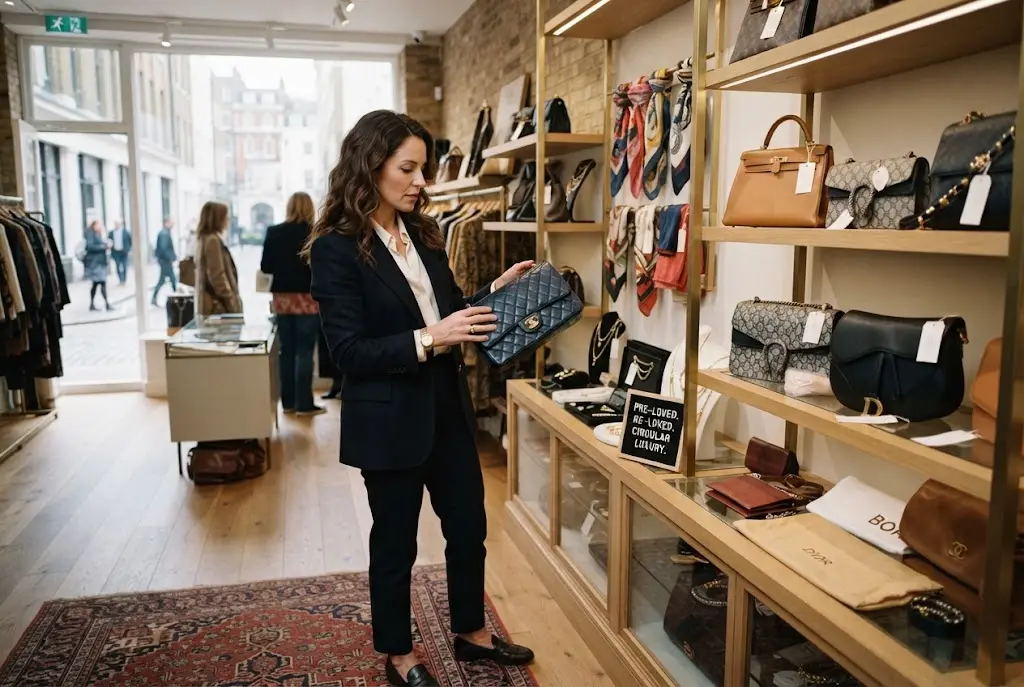
The luxury resale business has become an increasingly important part of modern fashion, giving shoppers another way to buy designer handbags, watches, jewellery, shoes and accessories. Instead of a luxury item having only one owner, resale allows desirable pieces to move between wardrobes while retaining value in the secondary market.
For shoppers, the appeal can include access to discontinued designs, lower prices than new retail and the opportunity to find distinctive pieces with an established history. For sellers and businesses, the market creates another route to generate value from products that are no longer being used.
However, running or participating in luxury resale involves more than simply listing expensive products online. Authentication, condition assessment, pricing, customer trust, photography, logistics and brand knowledge all influence whether a resale operation can succeed.
What Is a Luxury Resale Business?
A luxury resale business specialises in buying, selling, consigning or facilitating transactions involving previously owned premium and luxury goods. Depending on its model, a business may own the inventory itself, sell products on behalf of customers or connect individual buyers and sellers through a marketplace.
Typical products include designer handbags, jewellery, watches, shoes, belts, scarves and other fashion accessories. Some businesses specialise in particular categories or brands, while larger platforms offer a broad selection.
The business model is part of the wider circular economy. UK government policy on textiles specifically identifies resale, rental and repair as circular business models that can increase product utilisation and create income streams without relying entirely on new products.
That makes luxury resale relevant not only to fashion shoppers but also to retailers, entrepreneurs and established brands looking for additional ways to extend the life of products.
Why Is the Luxury Resale Market Growing?
Several factors have helped make reselling luxury items more attractive to both buyers and sellers.
First, luxury goods can retain significant desirability after their original purchase. A handbag that is no longer available from a current collection may still be highly sought after by shoppers searching for a particular shape, colour or discontinued design.
Second, consumers have become more comfortable with pre-owned shopping. The UK government introduced new guidance in May 2026 to help shoppers identify counterfeit fashion and shop more confidently in the growing pre-loved market.
Third, resale gives owners an opportunity to recover some value from items that would otherwise remain unused in a wardrobe. This creates a cycle in which one person’s unwanted accessory can become another person’s sought-after purchase.
Pre-Owned Luxury Is More Than a Lower Price
Although price is an important reason people shop resale, it is not the only motivation.
Some shoppers want vintage or discontinued designs. Others prefer the character that comes with an older item. Collectors may be interested in rarity, provenance, specific production periods or unusual colourways.
As a result, a strong resale business needs to understand why a particular item is desirable rather than assuming that every pre-owned product should simply be discounted.
Reselling Luxury Items: How the Business Model Works
Reselling luxury items can follow several different models.
Direct Buying
Under a direct-buying model, the resale business purchases an item from its owner. The seller receives an agreed payment, while the business becomes responsible for preparing, marketing and selling the product.
The main advantage for the seller is convenience. They receive a defined offer without having to wait for an individual buyer to purchase the item.
The business, however, takes on more risk. It must accurately assess the item’s value, authenticate it, store it and eventually sell it for enough to cover its purchase cost, operating expenses and desired margin.
Consignment
Consignment works differently. The original owner retains an interest in the item while the resale company markets and sells it on their behalf.
Once the product sells, the business keeps an agreed commission and the owner receives the remaining amount.
This model can reduce inventory risk for the reseller, although the seller may need to wait longer for payment. FASHIONPHILE, for example, offers both direct offers and consignment services, with its consignment programme based on selling pre-owned luxury accessories on behalf of owners.
Marketplace Model
A marketplace can operate with buyers and sellers interacting through a platform. The business may provide payment processing, authentication, shipping support, buyer protection and dispute management while earning a fee from transactions.
This model can scale efficiently because the platform does not necessarily need to own every product listed on its website. However, maintaining trust becomes critical because the quality of the marketplace depends on the reliability of its sellers and verification systems.
Authentication Is the Foundation of Luxury Resale
One of the biggest differences between ordinary second-hand fashion and luxury resale is the importance of authenticity.
Counterfeit products can damage a resale company’s reputation, create financial losses and undermine customer confidence. For this reason, established luxury resale businesses invest heavily in authentication and product verification.
FASHIONPHILE says its authentication process examines elements including craftsmanship, stitching, stamps, engravings, hardware, materials and serial numbers where applicable. It also assesses condition, repairs and ownership history.
UK government guidance published in 2026 similarly recommends that second-hand shoppers check details such as stitching, materials, logo placement, labels and other indicators of authenticity. It also advises buyers to use platform verification and buyer-protection tools when available.
For a resale business, authentication is therefore not simply an optional extra. It is central to building a trustworthy marketplace.
How to Build Trust When Selling Second-Hand Luxury
A successful second-hand luxury operation needs to make customers comfortable with the fact that they are buying a previously owned product.
Clear product descriptions are essential. Buyers should be able to understand the item’s condition, measurements, materials, included accessories and any noticeable signs of wear.
High-quality photography is equally important. Images should show the product from multiple angles and highlight areas that matter, such as corners, handles, interiors, hardware, labels and logos.
UK government guidance for second-hand sellers recommends clear photographs of important details, proof of authenticity where available, original packaging or certificates when applicable, and accurate tracking information when shipping items.
Transparency may reduce the chance of a sale being completed immediately, but it can strengthen long-term customer trust and reduce disputes.
Sell Your Luxury Items: What Sellers Should Know
If you want to sell your luxury items, the condition and documentation of your products can influence how attractive they are to a resale business.
Before submitting an item, identify the exact model and gather any original accessories you still have. Receipts, boxes, dust bags, authenticity documentation and purchase records can be useful where available.
Condition is also important. Carefully inspect areas that experience regular wear, including handbag corners, handles, straps, hardware and interiors. Do not hide flaws. A professional reseller will assess them anyway, and accurate information can make the process smoother.
FASHIONPHILE’s seller guidance recommends clear photographs, information about colour and wear-prone areas, and accurate descriptions of ageing and included accessories.
Should You Sell Directly or Use Consignment?
The right option depends on your priorities.
A direct sale may be attractive if you want a straightforward transaction and faster certainty about the amount you will receive. Consignment can make sense if you are willing to wait for the item to sell in exchange for a potentially different payout structure.
Before choosing, compare the actual offer, commission structure, expected selling time and payment terms rather than focusing only on the advertised resale price.
How Luxury Resale Businesses Price Products
Pricing is one of the most important skills in the resale industry.
A resale business must consider more than the original retail price. Factors can include brand, model, age, condition, material, colour, rarity, current demand and available inventory.
Market conditions can also change quickly. A style that is highly desirable today may receive less attention later, while an older design can become more valuable if it returns to fashion.
This is why resale pricing requires ongoing market research rather than a single fixed formula.
Condition Has a Direct Impact on Value
Two identical handbags can command very different prices if one is close to new and the other has visible wear.
Professional resale businesses therefore need consistent grading systems. Customers should be able to understand whether a product is new, excellent, very good, good or showing more substantial signs of use.
Consistency is important because customers may compare dozens of listings before deciding which item represents the best value.
Pre-Owned Luxury and the Collector’s Market
Pre-owned luxury can appeal strongly to collectors because resale platforms can provide access to pieces that are no longer produced.
Collectors may search for vintage handbags, limited editions, unusual materials, discontinued colours or products from specific periods in a brand’s history.
This creates an interesting distinction between ordinary resale and collectible resale. A product does not necessarily become less desirable simply because it is older. In some cases, age, rarity and historical significance can increase its appeal.
However, collectors should still evaluate authenticity, condition and provenance carefully. Rarity alone does not guarantee value.
Second-Hand Luxury and Personal Style
Second hand luxury also gives fashion-conscious shoppers more freedom to develop a distinctive wardrobe.
Instead of buying only from current collections, shoppers can search across previous seasons and discover pieces that complement their existing style. A discontinued handbag can sometimes become the defining accessory in an otherwise simple outfit.
This approach connects naturally with our guide to fashion icons of today, where we explore how modern style leaders use distinctive accessories and carefully balanced outfits to create memorable looks.
It also follows the distinction explored in our designer vs luxury guide, which explains why design identity, craftsmanship, heritage and luxury positioning can all influence how shoppers value a fashion item.
What Makes a Luxury Resale Business Successful?
A strong resale business usually depends on several connected capabilities.
- Authentication: Customers need confidence that products are genuine.
- Pricing: Inventory needs to be priced competitively while protecting margins.
- Condition assessment: Wear must be evaluated consistently and described accurately.
- Photography: Product images should make important details easy to inspect.
- Inventory management: Valuable products need secure storage and organised tracking.
- Customer service: Buyers and sellers need clear answers before and after transactions.
- Brand knowledge: Staff need to understand the differences between models, materials and production periods.
- Trust: A strong reputation can become one of the company’s most valuable assets.
These elements work together. Excellent photography cannot compensate for weak authentication, while accurate authentication alone will not create a strong customer experience if products are poorly described or shipped unreliably.
Can Luxury Resale Be a Circular Fashion Business?
Resale is increasingly discussed as part of circular fashion because it keeps existing products in use for longer.
The UK government’s waste-prevention programme identifies resale, rental and repair as circular business models that can increase product utilisation and diversify business income.
This does not mean resale automatically makes every fashion purchase sustainable. The environmental impact of fashion is complex, and factors such as transportation, packaging, product longevity and purchasing behaviour still matter.
Nevertheless, extending the useful life of a well-made luxury item can provide an alternative to treating fashion as disposable. That principle is particularly relevant for durable handbags, watches, jewellery and other accessories designed to remain in use for years.
Challenges Facing the Luxury Resale Business
The opportunity comes with significant challenges.
Counterfeiting remains one of the most serious. UK government figures released in 2026 reported that one in four second-hand clothing buyers had unknowingly purchased a counterfeit item online during the previous year.
Resellers must also manage fluctuating demand, changing fashion trends, inventory costs and customer expectations. A product may sit in stock for months if its price or styling appeal no longer matches the market.
Another challenge is maintaining consistent quality as the business grows. A small specialist operation may know every item personally, while a larger company needs documented processes, trained authenticators, technology and quality-control systems.
The Future of Luxury Resale
The future of the luxury resale industry is likely to involve a combination of specialist expertise and increasingly sophisticated digital tools.
Online marketplaces can make it easier for buyers to discover products across different cities and countries. At the same time, authentication services, digital records, detailed product photography and improved inventory systems can help strengthen trust.
The market is also expanding beyond simple buying and selling. Services such as cleaning, repair, authentication, valuation, consignment and collection management can create additional revenue opportunities around the same luxury item.
FASHIONPHILE, for example, has expanded its authentication expertise into FASHIONPHILE Certified, offering authentication as a dedicated service for pre-owned luxury bags and accessories.
This illustrates how resale businesses can build services around trust and expertise rather than relying exclusively on product margins.
How to Approach Luxury Resale as a Shopper
If you are buying from a resale business, avoid making your decision based solely on price.
Check the seller’s reputation, authentication process, product photographs, condition description, return policy and payment protections. If the price is dramatically below comparable listings, investigate why rather than assuming you have found an exceptional bargain.
The UK government’s 2026 guidance specifically recommends being cautious when a genuine designer item appears suspiciously cheap and encourages buyers to use platform verification and protection tools.
Most importantly, compare like with like. A nearly new handbag with original accessories should not be compared directly with a heavily worn example simply because they share the same model name.
Final Thoughts on the Luxury Resale Business
The luxury resale business has developed into a sophisticated part of the modern fashion industry. It gives sellers another way to recover value from unwanted accessories and gives buyers access to pre-owned, vintage and discontinued luxury pieces.
Successful resale depends on trust. Authentication, transparent condition grading, accurate photography, sensible pricing and reliable customer service all matter. As the market continues to grow, businesses that combine strong product knowledge with a trustworthy customer experience are well placed to stand out.
For shoppers, the biggest opportunity is choice. Pre-owned luxury can open the door to pieces that may no longer be available through traditional retail while helping extend the useful life of products already in circulation.
Whether you are exploring resale as a business opportunity or simply looking to sell your luxury items, the same principle applies: understand the product, verify its authenticity, assess its condition honestly and make decisions based on real market value rather than hype.
